

Table of Contents
The Science of Hybrid Performance: How Creatine Fuels HYROX Stations
HYROX represents an absolute crucible of physical fitness. It forces competitors to master a brutal compromise between sustained aerobic capacity and raw, explosive muscular power. The unique format of alternating eight 1 km running laps with eight distinct functional workout stations means your body cannot rely on a single metabolic pathway. Instead, you are constantly forcing your cardiovascular system and your skeletal muscle architecture to transition seamlessly between completely different energy systems.
To maximize your efficiency during these transitions, you must optimize your body at a cellular level. Among all performance aids available to modern hybrid athletes, pure micronized creatine monohydrate stands alone as the most thoroughly researched compound to support this exact metabolic demand.
ATP Regeneration and the Phosphagen Energy System
Every movement you make during a race is ultimately powered by a single molecular currency: Adenosine Triphosphate, or ATP. When you start an explosive, high-intensity exertion, your muscles immediately drain their localized ATP stores to unleash maximum force. However, your body only holds enough baseline ATP to sustain maximum physical output for roughly 2 to 3 seconds.
Once this immediate supply is depleted, the body must rapidly rebuild it. It accomplishes this by pulling from a fast-access internal backup tank known as the phosphagen system. This system utilizes a stored compound called phosphocreatine to rapidly donate a phosphate molecule to spent adenosine diphosphate, converting it back into usable ATP.
This is precisely where daily creatine supplementation alters your performance baseline:
- Expanding the Tank: Supplementing expands your resting muscular phosphocreatine reserves by approximately 20%.
- Accelerating Resynthesis: Higher internal baseline reserves allow your body to regenerate its cellular currency significantly faster during short, high-intensity intervals.
- Sustaining Force Production: By speeding up this cellular rebuild process, you directly delay the onset of acute muscular fatigue during heavy, repeated efforts.

Managing the Sled-to-Lap Performance Transition
The true test of a competitor does not lie solely in how fast they run or how much weight they can move. The true test is how well they handle the immediate transition from a high-tension strength station back into an efficient, aerobic running stride.
When you attack a heavy strength block, your body generates massive amounts of metabolic byproducts, causing localized pH drops and a severe burning sensation in your working limbs. If your phosphagen system is fully optimized, your muscles handle the heavy resistance work with less acute cellular stress.
By maintaining saturated phosphocreatine stores, you reduce the overall metabolic cost of the strength work. Practically, this ensures that when you step off a heavy station platform and transition onto the running track, your legs feel less cooked, your running mechanics remain fluid, and your heart rate stabilizes much faster. You are utilizing a targeted chemical buffer to protect your aerobic pacing from being entirely compromised by anaerobic exertion.
Station-by-Station Breakdown
The benefits of saturation are not theoretical. They manifest directly at the critical checkpoints where races are won or lost:
- The Sled Push and Sled Pull: Moving heavy weights across carpeted tracks demands massive force production from your quads, glutes, and core. Saturation provides the explosive energy required to maintain momentum through every single step, preventing the sudden power drops that stall the sled.
- Burpee Broad Jumps: This station requires full-body plyometric extension repeated eighty times under severe cardiovascular stress. Saturated muscle tissue can regenerate energy much faster between individual jumps, keeping your movement smooth and your pacing consistent.
- Sandbag Lunges: Carrying a heavy weight over a long distance generates extreme eccentric tension through your quadriceps tendons. Optimized energy availability lets your muscles handle this structural load efficiently, preserving your running legs for the subsequent laps.
- Wall Balls: Facing one hundred repetitions at the very end of the race presents a massive psychological and physiological hurdle. Saturated stores provide the precise muscular endurance needed to maintain a crisp throw velocity, helping you hit the target cleanly and avoid devastating no-reps.
Calibrating Your Intake: The HYROX Creatine Dosage Matrix
To extract the maximum performance benefit from your supplementation, you must move away from the generic advice found on standard product labels. A flat recommendation of 3 to 5 grams per day fails to account for variations in individual muscle mass, training volumes, and specific competitive timelines. Your cellular storage capacity is directly tied to your total skeletal muscle architecture, meaning your daily intake strategy needs to be systematically calibrated to your body weight.
The Body-Weight Calibrated Guide
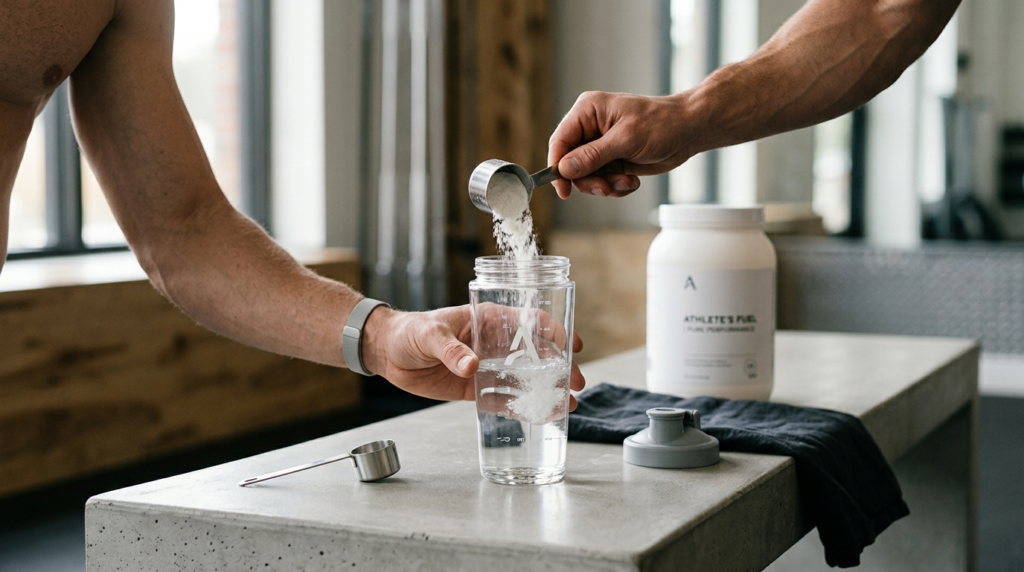
The matrix below outlines the daily requirements needed to establish and maintain full intramuscular phosphocreatine saturation. By adjusting your intake to your specific weight bracket, you ensure complete cellular energy availability without causing digestive distress.
- Lightweight Competitors (Under 140 lbs / 63 kg): Requires a daily maintenance dose of 3 grams. This is common for smaller endurance-focused athletes looking to preserve their running efficiency while building station strength.
- Middleweight Competitors (140 to 180 lbs / 63 to 82 kg): Requires a daily maintenance dose of 5 grams. This serves as the benchmark baseline for the vast majority of open and sport-category athletes.
- Heavyweight Competitors (Over 180 lbs / 82 kg): Requires a daily maintenance dose of 7 to 10 grams. Larger muscular frames feature a significantly higher total storage capacity, requiring more daily input to keep those reserves fully saturated.
Saturation Protocols: Slow Satiation vs. Acute Loading
There are two evidence-based methods for achieving full muscular saturation prior to a target race. Both protocols yield the exact same long-term performance benefits, but they follow completely different timelines.
1. The Gradual Accumulation Protocol (Recommended)
This approach bypasses any heavy loading phase in favor of consistent, long-term compliance. You simply take your body-weight calibrated maintenance dose every single day.
- Timeline: 28 days.
- How it works: Your muscle cells slowly accumulate the compound over a four-week block.
- Advantage: It completely avoids gastrointestinal discomfort and allows your body to smoothly adapt to the subtle shifts in cellular hydration.
2. The Accelerated Loading Protocol
If you have a competitive simulation or a target race approaching rapidly and have not been supplementing, you can accelerate cellular storage.
- Timeline: 5 to 7 days.
- How it works: You ingest a total of 20 grams per day, strictly split into four separate 5-gram doses taken throughout the day. After day 7, you immediately drop down to your standard daily maintenance dose.
- Advantage: It achieves full cellular readiness in less than a week, though it carries a slightly higher risk of minor stomach cramping if taken without sufficient water.
The Golden Rule of Compliance: Training Days vs. Rest Days
The ergogenic power of this supplement does not function like a pre-workout stimulant or an acute dose of caffeine. It does not provide an immediate jolt of energy if taken 30 minutes before a session. Instead, the performance dividend is a direct result of chronic, cumulative cellular saturation.
Missing multiple days causes your internal phosphocreatine stores to gradually decay back down to baseline levels, erasing your hard-earned performance edge. Therefore, absolute consistency is non-negotiable. You must take your calibrated dose every single day, including your complete rest days, recovery days, and travel days. To ensure your streak remains unbroken, link your daily intake to an established habit, such as mixing it into your morning hydration or pairing it with your post-workout recovery shake.
Debunking the Weight Gain Myth: Will Creatine Slow Down Your 1km Laps?
The single greatest hesitation hybrid athletes express when considering creatine supplementation is the fear of scale weight manipulation. In a sport where you must complete eight separate 1 km running intervals under heavy fatigue, any unnecessary physical mass acts as a direct tax on your running economy. The common concern is that adding weight will inevitably damage your stride mechanics, increase your aerobic cost, and ultimately slow down your lap times.
To make an informed decision for your training block, you must separate surface-level scale fluctuations from actual functional tissue adaptation.
Intracellular Volumization vs. Extracellular Bloating
When you begin establishing full cellular saturation, it is highly common to observe an initial increase in scale weight ranging from 1 to 2 kg within the first two weeks. However, this mass shift is fundamentally different from the soft, subcutaneous bloating associated with poor nutrition or hormonal fluid retention.
- Intracellular Hydration: Creatine is an osmolytic compound. As it is actively transported into your skeletal muscle fibers, it naturally draws water along with it. This results in localized water storage strictly inside the muscle cells.
- Zero Subcutaneous Fluid: Because the fluid is held within the cellular architecture of the muscle rather than beneath the skin, it does not cause soft bloating, puffiness, or heavy, sluggish limbs.
- Anabolic Environment: This internal cell swelling acts as a direct signaling mechanism that promotes local protein synthesis, stabilizes your lean muscle mass, and shields your tissues from cellular degradation during high-volume hybrid training blocks.

The Aerobic Math: Balancing Running Economy with Station Speed
Does this minor shift in cellular fluid compromise your running economy on the track? The short answer is no. Clinical data tracking endurance and hybrid athletes demonstrates that the minor mass cost of intracellular hydration does not meaningfully degrade sustained aerobic running performance.
When you evaluate a HYROX race as a complete ecosystem, the performance math heavily favors saturation:
[ +1-2 kg Intracellular Mass ] ──► Negligible Impact on Clear 1km Running Laps
│
▼
[ Saturated Muscle Architecture ] ──► Shaves 5% to 15% Time Off Heavy Stations
│
▼
[ NET RESULT ] ─────────────────────► Significant Overall Race Time Reduction
The minor energy cost of moving an extra kilogram around the running track is vastly outweighed by the massive performance dividends achieved at the functional checkpoints. Shaving 5% to 15% of your time off the heavy sled push, the burpee broad jumps, and the wall balls accumulates to a significant total time saving across the full race structure.
Preventing Intramuscular Cramping in Indoor Race Environments
Beyond raw power output, the fluid shifts caused by cellular saturation provide a massive defensive advantage on race day. HYROX events are held exclusively inside large, crowded indoor exhibition halls. These venues routinely suffer from poor ventilation, dry air, and elevated ambient temperatures caused by thousands of competing athletes.
Under these brutal indoor conditions, your sweat rate escalates rapidly, accelerating your rate of dehydration and leaving you highly vulnerable to debilitating muscular cramps during the back half of the race. Because saturated muscle tissue locks a reservoir of water directly inside the cells, it establishes a built-in hydration safety net. This advanced cellular fluid balance helps maintain structural osmotic stability, keeping your muscle fibers firing smoothly and preventing sudden cramping during high-tension movements like the sandbag lunges or the final wall ball block.
The Ultimate Race-Day Supplement Timing Protocol
A successful race-day strategy does not rely on a random collection of isolated supplement choices. To achieve peak physical output when you step onto the starting line, your nutritional intake must follow a precise, structured timeline. Every compound requires a specific window of time to clear your digestive tract, enter your bloodstream, and fully optimize your working muscles.
The protocol outlined below assumes a standard morning race start time and builds a synchronized framework to maximize energy availability, hydration, and fatigue resistance.
T-Minus 12 Hours: The Night Before the Starting Line
Your preparation for the physical demands of race morning begins the evening before you enter the venue. Your primary objective during this window is to secure high glycogen stores and initiate early hydration protocols.
- The Macronutrient Focus: Consume a familiar carbohydrate-dense dinner paired with a moderate serving of lean protein. Strictly avoid high-fat or high-fiber foods that can slow down your digestion and lead to morning sluggishness.
- The Creatine Component: Take your standard body-weight calibrated maintenance dose with your evening meal. This ensures your baseline muscular saturation levels are completely locked in before sleep.
- Early Sodium Loading: Incorporate a light sodium loading protocol by adding 300 to 500 mg of sodium to your evening fluids. This increases your resting plasma volume without placing an abrupt workload on your kidneys.
- The Sleep Priority: Cut off all caffeine intake by mid-afternoon. Deep restorative sleep is the single most important physiological intervention for your performance, and it must not be compromised.

T-Minus 3 Hours: The Final Pre-Race Meal
When you wake up on race morning, your liver glycogen has been partially depleted by overnight metabolic processes. You must systematically top off these reserves without overloading your stomach.
- Food Selection: Eat an easily digestible, low-fat, low-fiber carbohydrate meal such as white toast with honey, cream of rice, or a ripe banana.
- Target Metrics: Aim for a precise target of 1 to 3 grams of fast-acting carbohydrates per kilogram of body weight. This provides clean blood glucose stability without causing gastrointestinal distress when your heart rate spikes.
T-Minus 2 Hours: Enhancing Oxygen Efficiency
This window marks the ideal opportunity to introduce advanced oxygen-saving performance aids.
- Dietary Nitrates: Ingest a targeted dose of dietary nitrate, such as a concentrated beetroot shot or a dedicated nitrate supplement. Nitrates work by reducing the oxygen cost of submaximal exercise, letting you hold a faster running pace with less cardiovascular strain.
- The Mouthwash Restriction: Avoid using antibacterial mouthwash during this phase. The conversion of nitrate into its active form relies on beneficial bacteria residing in your mouth, and medical mouthwash kills these organisms, neutralizing the performance benefit.
T-Minus 60 to 90 Minutes: Maximizing Plasma Volume
This is the most frequently ignored phase of race-day execution, yet it provides a massive competitive advantage.
- The Sodium Protocol: Consume 400 to 600 mg of sodium dissolved in a full glass of water.
- The Physiological Goal: Drinking plain water alone dilutes your natural sodium balance, causing your body to quickly excrete the fluid. Adding a high concentration of sodium forces the water into your bloodstream and locks it there, expanding your blood volume. This expanded volume lowers your exercising heart rate, cools your core temperature, and preserves your output during late-stage race intervals.
T-Minus 45 to 60 Minutes: Elevating Cognitive Focus
With your hydration and carbohydrate foundations established, you can now safely activate your central nervous system.
- Caffeine Integration: Take a clinically backed dose of 3 to 5 mg of caffeine per kilogram of body weight. Caffeine works by blocking adenosine receptors in your brain, lowering your perception of effort and keeping your mental drive sharp.
- Product Selection: Use the exact capsule, gel, or pre-workout powder you thoroughly tested during your training simulations. Never introduce an untested product on race day.
Intra-Race Fueling and Immediate Post-Race Recovery
Your work does not end when you cross the start line. You must continue to manage your physiological state during and after the event.
- Intra-Race Fueling: For athletes who anticipate a total finish time exceeding 75 to 80 minutes, introduce a fast-digesting carbohydrate gel or chew around station 3 or 4. Do not wait until you feel a sudden energy crash to consume it, as that indicates your glycogen reserves are already depleted.
- Immediate Post-Race Recovery: Within the first 30 minutes after crossing the finish line, consume 1 to 1.2 grams of carbohydrates per kilogram of body weight paired with a high-quality protein shake. Rehydrate using a sodium-forward electrolyte drink to restore plasma volume significantly faster than plain water can achieve.
Frequently Asked Questions (FAQ)
What is the best type of creatine for HYROX athletes?
Pure micronized creatine monohydrate remains the undisputed gold standard for hybrid fitness. You should skip expensive, heavily marketed alternatives like creatine HCl, liquid creatine, or buffered formulations. Independent sports science data shows that these alternative variants fail to outperform standard monohydrate in head-to-head clinical trials. Look specifically for high-purity raw materials such as Creapure, and ensure the product carries third-party purity seals like NSF Certified for Sport or Informed Sport to confirm it is completely free from cross-contamination or hidden fillers.
Should female HYROX athletes take creatine?
Yes, female hybrid competitors stand to gain immense performance advantages from daily compliance. The common myth that it causes women to experience soft bloating or look bulky is completely false. Because the fluid retention occurs strictly inside the muscle cells rather than beneath the skin, it actually improves muscle density and definition while providing crucial structural support. For female athletes managing high running volumes alongside heavy sled work, it provides an essential tool to preserve lean muscle tissue, boost recovery kinetics, and maximize raw power output.
Do I need to cycle on and off creatine?
No, there is absolutely no physiological reason to implement on-and-off cycles. The International Society of Sports Nutrition explicitly states that continuous daily use is completely safe and effective for long-term health and athletic longevity. Cycling off the compound simply causes your intramuscular phosphocreatine reserves to slowly drain back down to baseline levels, forcing you to undergo a completely unnecessary 4-week re-saturation phase to regain your performance edge.
Does creatine cause kidney damage or hair loss?
In healthy individuals, decades of extensive clinical safety data have confirmed that daily compliance causes no negative impacts on kidney or liver function. The myth regarding hair loss stems from a single, isolated study on rugby players that has never been successfully replicated by modern sports science. If you have any pre-existing kidney conditions or specialized medical concerns, you should always consult your primary healthcare physician or GP before introducing any new compound into your daily routine.
Can I mix creatine with my pre-workout or protein shake?
Yes, you can seamlessly mix your daily dose into your post-workout protein shake, morning juice, or pre-workout formula. It dissolves cleanly in any liquid, and pairing it with a meal containing simple carbohydrates or high-quality protein can slightly enhance cellular absorption via insulin signaling. The absolute timing of the daily dose is far less critical than total cumulative compliance; choose a window that ensures you never miss a day.
Scientific References
- Kreider, R. B., et al. (2017). International Society of Sports Nutrition position stand: safety and efficacy of creatine supplementation in exercise, sport, and medicine. Journal of the International Society of Sports Nutrition.
- Guest, N. S., et al. (2021). International Society of Sports Nutrition position stand: caffeine and exercise performance. Journal of the International Society of Sports Nutrition.
- Trexler, E. T., et al. (2015). International Society of Sports Nutrition position stand: Beta-Alanine. Journal of the International Society of Sports Nutrition.
- Shirreffs, S. M., & Sawka, M. N. (2011). Fluid and electrolyte needs for training and competition. Journal of Sports Sciences.