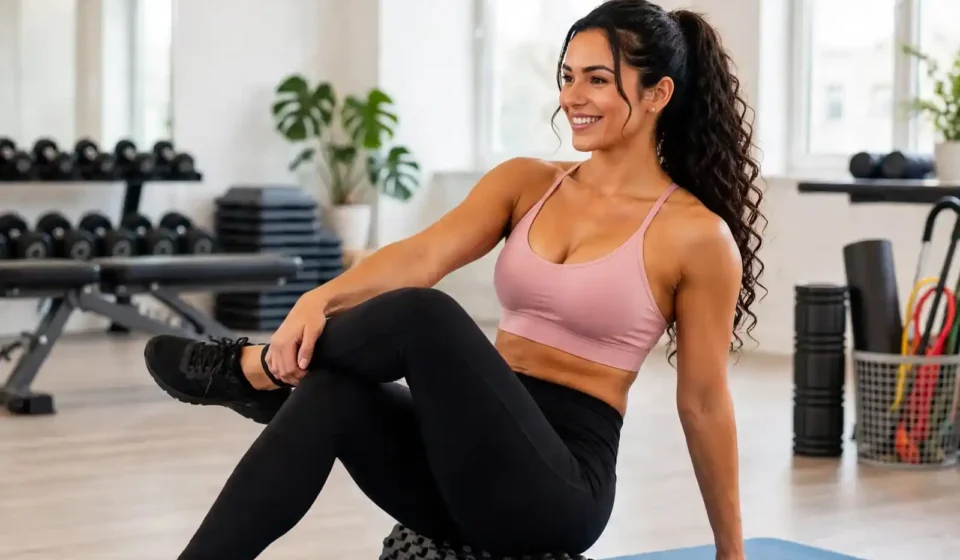

Feeling stiff after a workout or spending long hours sitting at a desk? Foam rolling is a simple recovery technique that can help you relax tight-feeling muscles and add a few minutes of self-care to your fitness routine.
It involves using a cylindrical foam roller to apply gentle pressure to different areas of the body. By slowly moving over the roller, you can explore areas of muscle tension and practise controlled movement.
Foam Rolling for Beginners: 8 Exercises for Better Recovery Foam rolling is popular among people who enjoy strength training, running, Pilates, and other forms of exercise. You do not need to be an experienced athlete to try it, and a basic foam roller is usually enough to get started.
In this beginner’s guide, you will discover what foam rolling is, its potential benefits, how to use a foam roller correctly, and eight beginner-friendly exercises to include in your recovery routine.
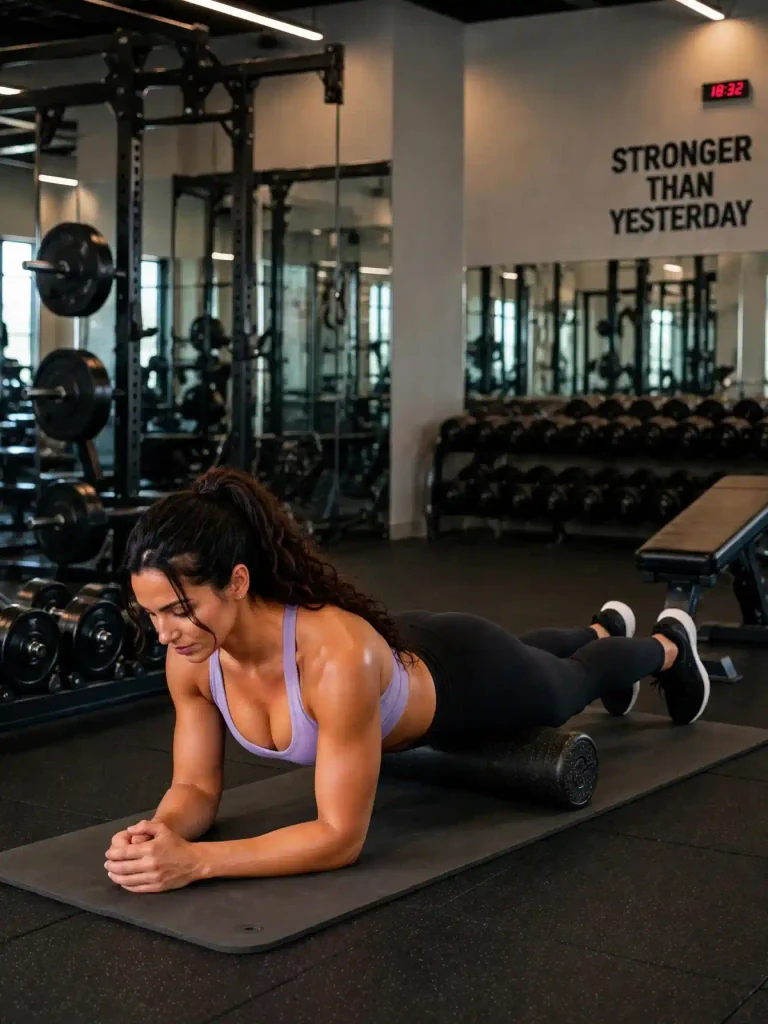
What Is Foam Rolling?
Foam rolling is a form of self-massage that uses a foam cylinder to apply pressure to muscles and surrounding soft tissues.
You place the roller underneath a particular body area and use your arms or legs to move slowly across it. The pressure can be adjusted by changing how much body weight you place on the roller.
Foam rolling is often included in warm-ups and cool-downs, as well as general mobility and recovery routines.
It may help with:
- Temporary relief from feelings of muscle tightness.
- Improving short-term range of motion.
- Relaxation after physical activity.
- Body awareness and controlled movement.
- Adding variety to a recovery routine.
Foam rolling should feel manageable and controlled. It is not supposed to be painful, and applying more pressure does not automatically produce better results.
Benefits of Foam Rolling
Foam rolling can be a useful addition to a balanced fitness routine. Here are some potential benefits for beginners.
1. Helps Reduce the Feeling of Muscle Tightness
Muscles can feel stiff after exercise or long periods of sitting. Gentle foam rolling may help you feel more comfortable by temporarily reducing the sensation of tightness.
It is a simple way to spend a few minutes focusing on areas that feel tense.
2. Supports Short-Term Flexibility
Some research suggests foam rolling can temporarily improve range of motion.
For example, rolling your calves or thighs before movement may help you feel more comfortable performing certain exercises.
It is best used alongside regular movement and mobility exercises rather than as a replacement for them.
3. Can Be Part of a Post-Workout Routine
After a workout, you may want to include a few gentle recovery activities before finishing your session.
Foam rolling is one option, alongside comfortable walking, relaxed stretching, and adequate rest.
4. Encourages Body Awareness
Foam rolling allows you to notice how different areas of your body feel.
You can practise moving slowly, controlling pressure, and identifying areas where you may need a gentler approach.
5. Easy to Do at Home
You do not need a gym membership or complicated equipment. A foam roller and a comfortable floor space are usually enough for basic exercises.
This makes foam rolling an accessible option for people who want to add a simple recovery habit to their routine.
8 Best Foam Rolling Exercises for Beginners
The following exercises focus on common muscle areas used during everyday movement and exercise.
Start with gentle pressure and slow movements. Spend around 20–30 seconds on each area initially, rather than trying to roll for a long time.
Avoid rolling directly over joints, bones, the lower back, or any injured or painful area.
1. Calf Foam Roll
<AsyncImage query=”fitness demonstration person foam rolling calf muscles on exercise mat side view” aspectRatio=”16:9″ width=”100%”/>
The calf muscles work during walking, running, jumping, and many lower-body exercises. Gentle rolling can be included in a routine when your calves feel tight.
How to do it:
- Sit on the floor with your legs extended.
- Place the foam roller underneath one calf.
- Support yourself with your hands.
- Slowly move your leg forward and backward over the roller.
- Repeat on the other calf.
Beginner tip: Start with both legs resting on the floor for extra support. Avoid placing too much body weight on the roller.
2. Quadriceps Foam Roll
<AsyncImage query=”person demonstrating quadriceps foam rolling front thigh exercise mat fitness” aspectRatio=”16:9″ width=”100%”/>
The quadriceps are the muscles at the front of your thighs. They are involved in activities such as walking, climbing stairs, and squatting.
How to do it:
- Lie face down on an exercise mat.
- Place the foam roller underneath your thighs.
- Support your upper body with your forearms.
- Slowly move forward and backward over the front of your thighs.
- Keep your movements controlled.
Beginner tip: Use gentle pressure and avoid rolling directly over your kneecaps.
3. Hamstring Foam Roll
<AsyncImage query=”fitness person sitting hamstring foam rolling back of thighs demonstration” aspectRatio=”16:9″ width=”100%”/>
The hamstrings are located along the back of your thighs. They help with movements such as walking, bending your knees, and extending your hips.
How to do it:
- Sit on the floor with the roller underneath your thighs.
- Place your hands behind you for support.
- Slowly move your body forward and backward.
- Keep the movement comfortable and controlled.
- Adjust your position to focus on the middle portion of your thighs.
Beginner tip: Keep both feet relaxed and avoid placing excessive pressure near the back of your knees.
4. Upper Back Foam Roll
<AsyncImage query=”person lying on back foam roller upper thoracic back mobility exercise demonstration” aspectRatio=”16:9″ width=”100%”/>
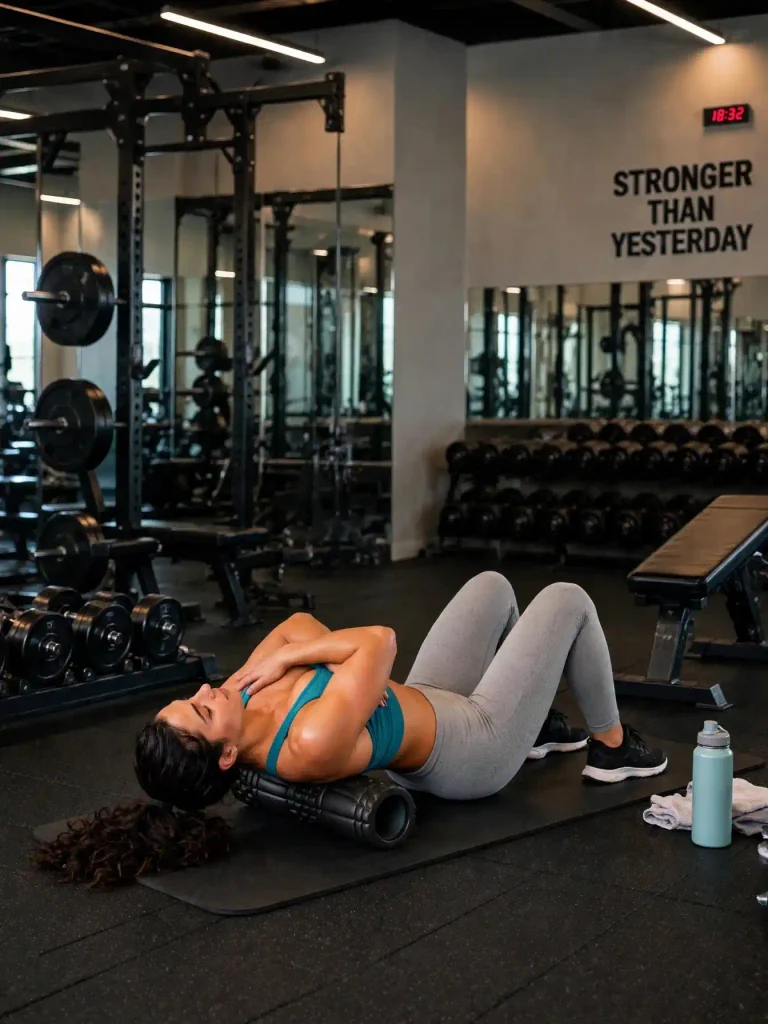
The upper back can feel stiff after spending long periods sitting or working at a desk. Gentle rolling may help improve comfort and movement in this area.
How to do it:
- Lie on your back with your knees bent.
- Place the roller underneath your upper back.
- Support your head with your hands.
- Keep your hips relaxed and lift them only slightly if comfortable.
- Make small, controlled movements over the upper back.
Beginner tip: Keep the roller below your shoulder blades and avoid rolling over your neck or lower back.
5. Glute Foam Roll
<AsyncImage query=”person seated on foam roller glute muscle self massage exercise demonstration” aspectRatio=”16:9″ width=”100%”/>
Your glute muscles help with walking, climbing stairs, and many strength exercises. This area can be included in a gentle foam rolling routine.
How to do it:
- Sit on the foam roller.
- Place both feet comfortably on the floor.
- Shift your weight slightly toward one side.
- Move slowly over the fleshy part of the glute.
- Switch sides and repeat.
Beginner tip: Keep the pressure light. Avoid rolling directly over the hip bones or lower back.
6. Outer Thigh Foam Rolling: A Gentle Alternative
<AsyncImage query=”person side lying foam roller lateral thigh fitness exercise demonstration” aspectRatio=”16:9″ width=”100%”/>
The outer thigh is a common area people try to roll after exercise. However, the outer thigh contains sensitive structures, and direct pressure can be uncomfortable.
For beginners, a gentler approach is to focus on the nearby glute and upper outer hip muscles rather than applying strong pressure along the entire side of the thigh.
How to do it:
- Lie on your side with the foam roller positioned near the upper outer thigh.
- Use your arms and opposite leg to control how much weight you place on the roller.
- Move only through a small, comfortable range.
- Keep the pressure gentle.
- Repeat on the opposite side if comfortable.
Beginner tip: Do not force your body weight onto the roller. Skip this exercise if it causes sharp discomfort, tingling, or numbness.
7. Latissimus Dorsi (Upper Side Back) Foam Roll
<AsyncImage query=”person side lying foam roller latissimus dorsi upper back muscle exercise demonstration” aspectRatio=”16:9″ width=”100%”/>
The latissimus dorsi muscles are located along the sides of your upper back. They are involved in pulling movements and shoulder movement.
How to do it:
- Lie on your side with the foam roller underneath your upper side back.
- Extend your arm comfortably overhead.
- Support your body with your other arm.
- Slowly move a short distance over the fleshy area beneath your armpit.
- Switch sides.
Beginner tip: Keep the roller away from your armpit, ribs, and shoulder joint. Use light pressure.
8. Gentle Foot Rolling
<AsyncImage query=”person sitting on chair rolling sole of foot over small massage roller fitness recovery” aspectRatio=”16:9″ width=”100%”/>
A small massage ball or compact roller can be used under the feet. This is an alternative to a full-size foam roller.
How to do it:
- Sit comfortably on a chair.
- Place a small massage ball under one foot.
- Slowly move your foot forward and backward.
- Use gentle pressure.
- Repeat with the other foot.
Beginner tip: Keep the movement gentle and avoid pressing directly on painful areas.
A Simple 10-Minute Foam Rolling Routine for Beginners
You do not need a long recovery session to get started. This simple routine covers several common muscle areas.
| Exercise | Suggested time |
|---|---|
| Calf foam roll | 1 minute |
| Quadriceps foam roll | 1 minute |
| Hamstring foam roll | 1 minute |
| Upper back foam roll | 2 minutes |
| Glute foam roll | 2 minutes |
| Upper side back foam roll | 1 minute |
| Gentle foot rolling | 2 minutes |
Total: 10 minutes
Move slowly, use comfortable pressure, and switch sides where appropriate. You can shorten the routine or leave out any exercise that does not feel comfortable.
When Should You Use a Foam Roller?
Foam rolling can be included at different points in your fitness routine.
Before a Workout
Some people use foam rolling before exercise as part of a warm-up. Gentle rolling may temporarily improve range of motion.
Follow it with dynamic movements that prepare you for your workout.
After a Workout
You can use a foam roller after exercise as part of a relaxed cool-down. It may help you feel less stiff, although it does not guarantee faster muscle recovery.
On Rest Days
A short, comfortable foam rolling session can also be included on a rest day if you enjoy it.
You do not need to roll every day. Choose a frequency that feels comfortable and fits your overall routine.
How to Choose the Right Foam Roller
There are several types of foam rollers available. Choosing a suitable one can make your first experience more comfortable.
1. Soft Foam Rollers
Soft rollers are often a good starting option because they provide gentler pressure.
They can be useful for beginners who are learning how to control their body position and pressure.
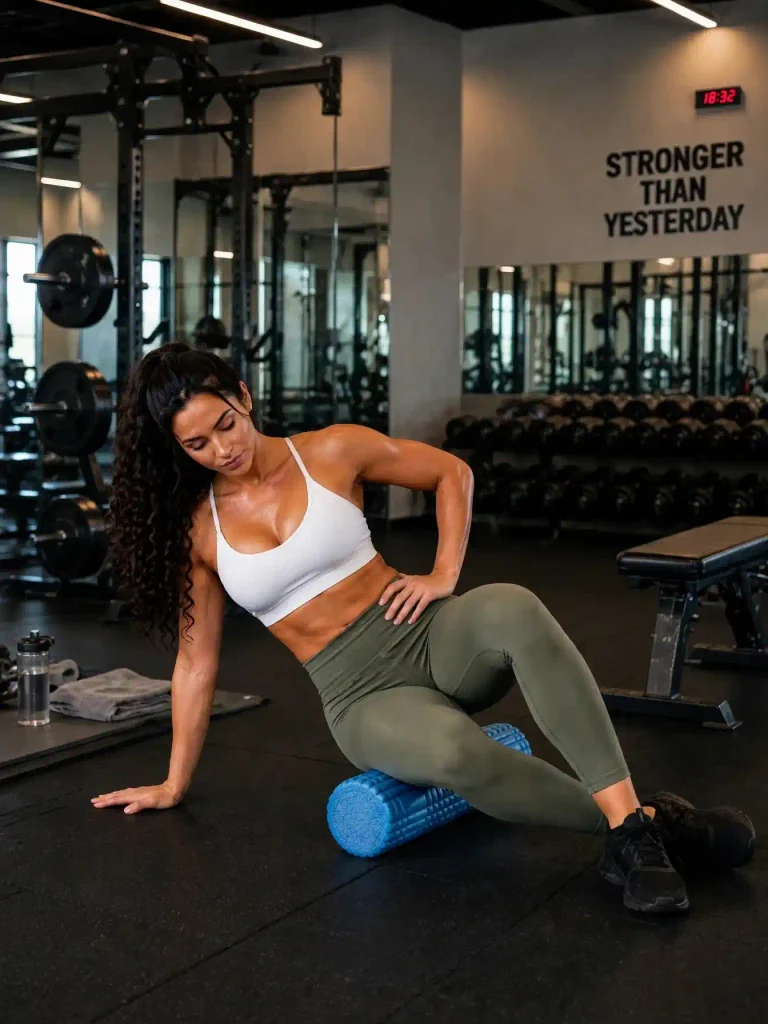
2. Medium-Density Foam Rollers
Medium-density rollers offer a firmer feel than soft rollers. They may suit people who already have some experience with foam rolling.
3. Textured Foam Rollers
Textured rollers have raised patterns on their surface. They can create a more noticeable pressure sensation, so they are not necessarily the best choice for beginners.
4. Small Massage Balls
Massage balls are useful for smaller areas such as the soles of the feet or certain areas around the glutes.
Start with a soft or medium-density roller that feels comfortable. A firmer roller is not automatically more effective.
Common Foam Rolling Mistakes to Avoid
Foam rolling should be a controlled and comfortable activity. Avoid these common beginner mistakes.
Applying Too Much Pressure
More pressure does not mean better results. Start gently and adjust only if the sensation remains comfortable.
Rolling Too Quickly
Moving too fast makes it difficult to control the pressure. Use slow movements and take your time.
Rolling Directly Over Joints
Avoid rolling directly over your knees, elbows, ankles, and other bony areas. Focus on the surrounding muscle tissue instead.
Ignoring Pain or Numbness
Foam rolling should not cause sharp pain, tingling, or numbness. Stop if you experience these sensations.
Expecting Foam Rolling to Fix Every Problem
Foam rolling may provide temporary relief from tightness, but it is not a treatment for injuries or a replacement for appropriate medical care.
Safety Tips for Foam Rolling
Before adding foam rolling to your recovery routine, keep these basic guidelines in mind:
- Begin with a soft or medium-density roller.
- Use gentle pressure, especially during your first sessions.
- Avoid rolling directly over bones and joints.
- Do not roll over bruises, open wounds, or injured areas.
- Avoid direct pressure on the neck and lower back.
- Stop if you experience sharp pain, tingling, or numbness.
- Keep your movements slow and controlled.
If you have an injury, a medical condition, or ongoing pain, ask a qualified healthcare professional whether foam rolling is appropriate for you.
Frequently Asked Questions
Is foam rolling good for beginners?
Yes. Beginners can use a foam roller to explore gentle self-massage and movement. Start with simple exercises, use light pressure, and avoid sensitive or injured areas.
How long should you foam roll each muscle?
A short period of around 20–30 seconds per area is a reasonable starting point for beginners. You do not need to spend several minutes repeatedly rolling the same muscle.
Should you foam roll before or after a workout?
You can use foam rolling before or after exercise. Before a workout, it may temporarily improve range of motion. After exercise, it can be part of a relaxed cool-down routine.
Does foam rolling help muscle recovery?
Foam rolling may temporarily reduce feelings of soreness or tightness for some people. However, it does not guarantee faster muscle repair. Sleep, appropriate nutrition, rest, and sensible training progression remain important parts of recovery.
Can you foam roll every day?
Some people include gentle foam rolling regularly, but daily sessions are not necessary. Pay attention to comfort and avoid repeatedly applying pressure to areas that feel irritated.
Is a hard or soft foam roller better?
A soft or medium-density foam roller is usually a more comfortable starting point for beginners. Hard and textured rollers can feel intense and are not required for a useful routine.
Can foam rolling replace stretching?
No. Foam rolling and stretching are different activities. Foam rolling uses pressure, while stretching involves lengthening muscles through movement or holding a position. Both can be included in a balanced mobility routine.
What areas should you avoid foam rolling?
Avoid direct pressure over joints, bones, the neck, lower back, injured areas, and places that cause sharp pain or unusual sensations. If you are unsure about a particular area, seek professional guidance.
Final Thoughts
Foam rolling can be a simple addition to your fitness and recovery routine. It gives you a way to apply gentle pressure to common muscle areas, practise controlled movement, and spend a few minutes focusing on how your body feels.
Exercises for the calves, quadriceps, hamstrings, glutes, and upper back are useful starting points for learning the basics.
You do not need an expensive roller or a complicated recovery programme. Start with gentle pressure, keep your movements slow, and choose exercises that feel comfortable.
Remember that foam rolling is just one part of recovery. Regular movement, rest, and a balanced fitness routine all play an important role in supporting your overall well-being.