


Do you sometimes feel stiff after sitting for a long time or find it difficult to move comfortably during everyday activities? Limited mobility can make simple movements, such as bending, reaching, turning, and walking, feel less comfortable. Adding mobility exercises to your fitness routine is a simple way to practice better movement and maintain an active lifestyle.
12 Best Mobility Exercises for Beginners to Improve Flexibility and Movement Unlike traditional stretching, mobility training focuses on how comfortably and actively your joints move through different ranges of motion. It combines controlled movements, flexibility, coordination, and strength to help your body move more efficiently.
The good news is that you don’t need a gym membership, expensive equipment, or hours of exercise to get started. Many mobility exercises can be performed at home using only a comfortable exercise mat and a little space.
In this beginner-friendly guide, you’ll discover 12 effective mobility exercises, learn how to perform them correctly, and find a simple weekly routine to help you include more movement in your everyday life.
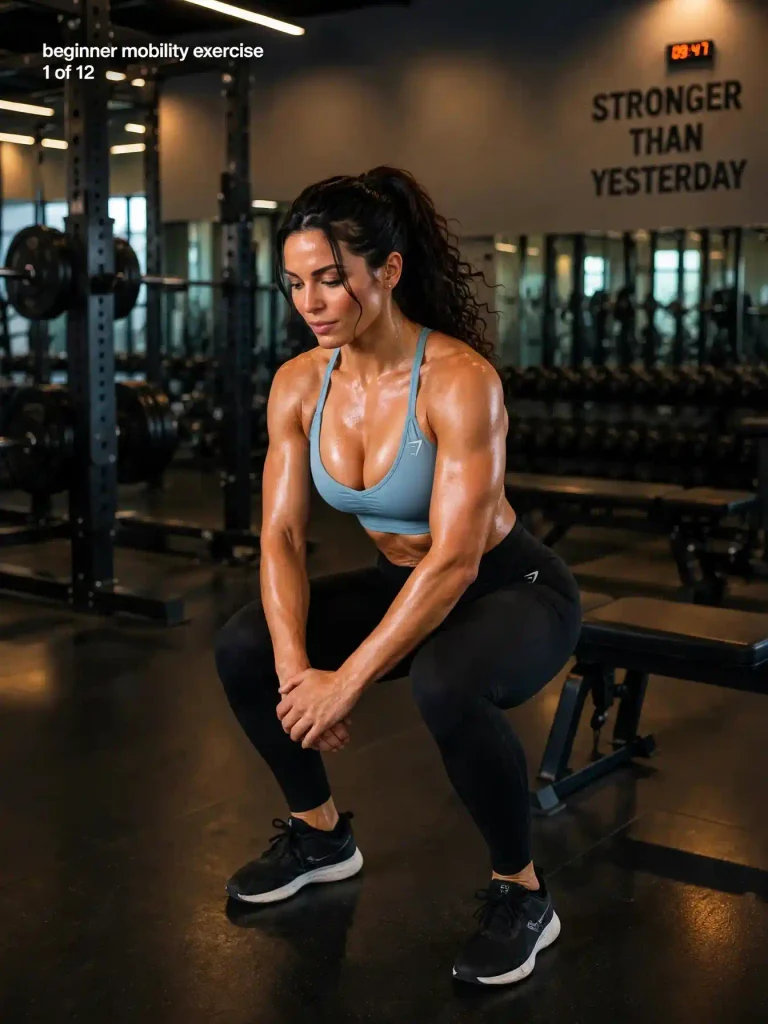
What Are Mobility Exercises?
Mobility exercises are movements designed to improve or maintain the ability of your joints to move through a comfortable range of motion.
They often involve controlled movements that engage the muscles surrounding your joints.
For example, shoulder circles help you move your shoulders through different positions, while hip rotations encourage controlled movement around the hip joints.
Mobility training can include:
- Dynamic stretching
- Controlled joint rotations
- Hip mobility exercises
- Shoulder mobility movements
- Spinal rotations
- Ankle mobility exercises
- Functional bodyweight movements
Mobility and flexibility are closely related, but they are not exactly the same. Flexibility generally refers to how far muscles and other soft tissues can stretch, while mobility also involves active movement and control around a joint.
Why Are Mobility Exercises Important?
Mobility training can be a valuable addition to a balanced fitness program. It helps you practice movements that are useful during exercise and everyday activities.
Here are some important benefits.
1. Supports Comfortable Everyday Movement
Good mobility helps you perform everyday movements such as reaching overhead, bending down, turning your body, and climbing stairs.
Regular practice can help maintain comfortable movement patterns.
2. Improves Range of Motion
Mobility exercises encourage your joints to move through different positions in a controlled way.
This can be particularly useful for people who spend long periods sitting or performing repetitive activities.
3. Supports Better Workout Preparation
Dynamic mobility movements can be included in a warm-up before activities such as strength training, running, and cycling.
They help you gradually prepare your body for the movements required during exercise.
4. Encourages Better Movement Control
Mobility exercises often involve moving slowly and paying attention to body position.
This can help develop coordination and control during different activities.
5. Complements Strength Training
Strength training and mobility work can complement each other. Many resistance exercises involve moving joints through a range of motion while working against resistance.
Combining different types of exercise can help create a more balanced fitness routine.
6. Helps Break Up Long Periods of Sitting
Sitting for extended periods can make some people feel stiff.
Short movement breaks involving gentle shoulder, hip, and ankle movements can provide an opportunity to change positions and stay active.
12 Best Mobility Exercises for Beginners
You don’t need to perform all 12 exercises in one session. Start with movements that feel comfortable and choose exercises that target the areas you want to work on.
1. Cat-Cow Stretch
The cat-cow movement is a gentle exercise that encourages controlled movement through the spine.
How to do it:
- Start on your hands and knees on an exercise mat.
- Place your hands beneath your shoulders and knees beneath your hips.
- Slowly round your back while gently lowering your head.
- Return to a neutral position.
- Gently lift your chest and move your back into a comfortable arch.
- Continue alternating between the two positions.
Try 8 to 10 slow repetitions.
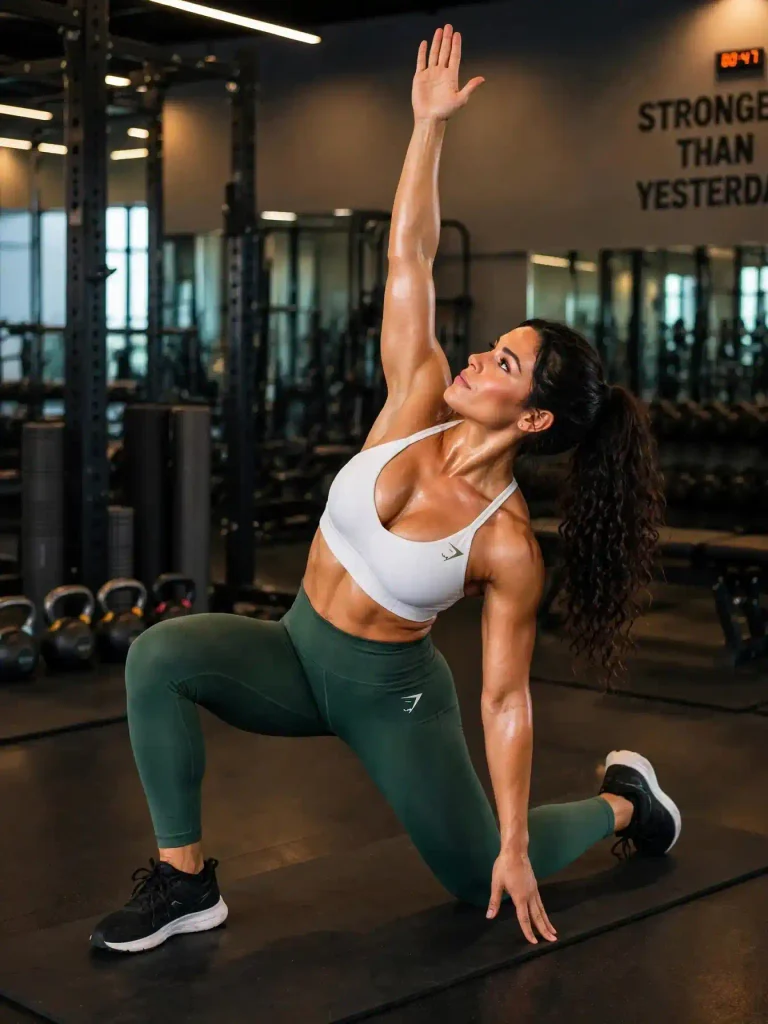
2. World’s Greatest Stretch
This movement combines a gentle lunge with upper-body rotation.
How to do it:
- Start in a comfortable standing position.
- Step one foot forward into a controlled lunge.
- Place your hands near the inside of your front foot, using support if needed.
- Slowly rotate your upper body toward the front leg.
- Reach the same-side arm upward if comfortable.
- Return to the starting position and switch sides.
Try 4 to 5 repetitions per side.
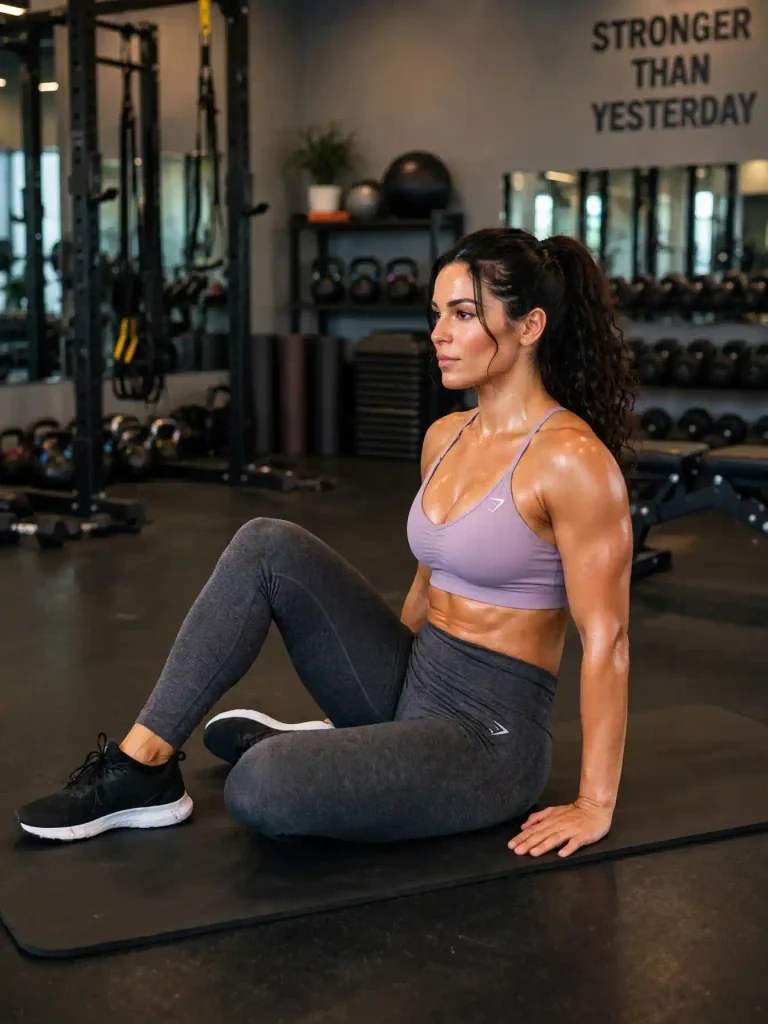
3. 90/90 Hip Stretch
The 90/90 position is commonly used to practice hip rotation.
How to do it:
- Sit on an exercise mat.
- Bend your front leg in front of your body.
- Position your back leg to the side, with both knees comfortably bent.
- Keep your upper body upright.
- Slowly lean forward over your front leg.
- Return to an upright position and repeat.
Spend approximately 20 seconds on each side, without forcing the position.
4. Hip Circles
Hip circles encourage controlled movement around the hip joints.
How to do it:
- Stand upright with your feet comfortably apart.
- Place your hands on your hips or hold a stable support.
- Slowly move your hips in a circular motion.
- Keep your upper body relaxed.
- Complete several circles in one direction.
- Reverse the direction.
Try 8 circles in each direction.
5. Standing Leg Swings
Leg swings are a dynamic movement that helps prepare the hips and legs for activity.
How to do it:
- Stand beside a sturdy wall or countertop.
- Hold the support with one hand.
- Shift your weight onto one leg.
- Gently swing the opposite leg forward and backward.
- Keep the movement controlled.
- Switch legs after completing your repetitions.
Try 10 swings per leg.
6. Thoracic Spine Rotations
This exercise focuses on movement through the upper back.
How to do it:
- Begin on your hands and knees.
- Place one hand behind your head.
- Keep your hips relatively stable.
- Slowly rotate your upper body toward the side.
- Bring your elbow toward the opposite arm.
- Return to the starting position.
- Repeat on the other side.
Try 8 repetitions per side.
7. Shoulder Circles
Shoulder circles are a simple exercise for practicing comfortable shoulder movement.
How to do it:
- Stand or sit upright.
- Relax your arms beside your body.
- Slowly lift your shoulders.
- Move them backward and downward in a circular motion.
- Repeat in the opposite direction.
Try 10 repetitions in each direction.
8. Ankle Circles
Ankle mobility is useful for movements such as walking, squatting, and climbing stairs.
How to do it:
- Sit comfortably on a chair.
- Extend one leg slightly forward.
- Lift your foot gently off the floor.
- Slowly rotate your ankle in a circular motion.
- Complete several circles in one direction.
- Reverse the direction and switch feet.
Try 8 circles in each direction per ankle.
9. World’s Greatest Squat Hold
A supported squat position can help you practice movement around the hips, knees, and ankles.
How to do it:
- Stand with your feet slightly wider than hip-width apart.
- Keep your toes pointing slightly outward.
- Hold a stable support if necessary.
- Slowly bend your hips and knees.
- Lower yourself only as far as comfortable.
- Maintain a steady posture.
- Return to standing slowly.
Try 5 repetitions, pausing briefly in a comfortable position.
10. Downward Dog to Plank
This movement combines shoulder, hip, and ankle positioning with controlled full-body movement.
How to do it:
- Start on your hands and knees.
- Lift your knees and move your hips upward and backward.
- Straighten your legs as comfortably as possible.
- Slowly move forward into a plank position.
- Keep your body controlled throughout the movement.
- Return to the starting position.
Try 5 to 8 controlled repetitions. You can keep your knees slightly bent if needed.
11. World’s Greatest Calf and Ankle Stretch
This movement encourages ankle mobility and comfortable calf movement.
How to do it:
- Stand facing a wall.
- Place both hands against the wall.
- Step one foot backward.
- Keep the back heel comfortably close to the floor.
- Slowly bend your front knee.
- Move your body forward slightly.
- Return to the starting position and switch legs.
Hold for approximately 15 to 20 seconds on each side.
12. Seated Spinal Twist
This gentle movement helps you practice upper-body rotation.
How to do it:
- Sit upright on a comfortable chair or exercise mat.
- Keep your feet supported.
- Place your hands comfortably across your chest.
- Slowly rotate your upper body toward one side.
- Keep your hips facing forward.
- Return to the center.
- Repeat on the opposite side.
Try 5 to 8 repetitions per side.
A Simple 10-Minute Full-Body Mobility Routine
If you’re new to mobility training, a short routine can be easier to maintain than a complicated workout.
Here is a simple example combining movements from the exercises above.
| Exercise | Suggested Time |
|---|---|
| Cat-Cow Stretch | 1 minute |
| Shoulder Circles | 1 minute |
| Hip Circles | 1 minute |
| Thoracic Spine Rotations | 2 minutes |
| Standing Leg Swings | 1 minute |
| 90/90 Hip Stretch | 2 minutes |
| Ankle Circles | 1 minute |
| Seated Spinal Twist | 1 minute |
Move slowly and adjust the duration according to your comfort. You can also choose fewer exercises when you’re short on time.
How Often Should You Do Mobility Exercises?
The ideal frequency depends on your fitness routine, activity level, and personal needs.
For beginners, starting with two or three mobility sessions per week can be a manageable approach.
Consider these simple guidelines:
- Include a few dynamic mobility movements before workouts.
- Take short movement breaks during long periods of sitting.
- Practice gentle mobility exercises on non-training days.
- Choose exercises that target the joints involved in your regular activities.
- Increase your practice gradually as you become more comfortable.
Consistency is more important than performing a long mobility session occasionally. Research discussed in a 2024 review highlighted the importance of regular mobility practice, with two to three weekly sessions being a useful general approach.
Common Mobility Training Mistakes to Avoid
Mobility exercises should feel controlled and comfortable. Avoiding a few common mistakes can help make your sessions more effective.
1. Moving Too Quickly
Mobility training is not about rushing through repetitions.
Move slowly enough to control each position and understand how your body responds.
2. Forcing Your Range of Motion
Trying to reach the deepest possible position is not necessary.
Work within a comfortable range and gradually become familiar with each movement.
3. Skipping the Warm-Up
If you’re preparing for a more demanding workout, begin with a few minutes of comfortable movement before attempting more challenging exercises.
4. Focusing on Only One Body Area
Although you may have a particular area you want to work on, a balanced routine can include movements for the shoulders, spine, hips, and ankles.
5. Expecting Immediate Results
Mobility develops through regular practice. Give yourself time to become familiar with the movements rather than expecting major changes after one session.
How to Improve Your Mobility Over Time
Developing a consistent mobility routine doesn’t have to be complicated.
Here are some practical ways to make progress.
Start With Basic Movements
Choose a few beginner-friendly exercises and learn how to perform them comfortably before adding more challenging movements.
Focus on Consistency
Set aside a few minutes several times per week. A short routine that fits your schedule is easier to maintain.
Combine Mobility and Strength Training
Include exercises that develop strength through controlled ranges of motion. Squats, bridges, and other bodyweight movements can complement dedicated mobility work.
Pay Attention to Your Movement
Notice whether certain movements feel more comfortable or controlled after regular practice. Avoid judging progress only by how far you can stretch.
Adapt Your Routine
Your exercise needs may change depending on your activities and schedule. Adjust your routine to include movements that support the activities you enjoy.
Frequently Asked Questions
What are the best mobility exercises for beginners?
Some useful beginner exercises include cat-cow stretches, shoulder circles, hip circles, ankle circles, standing leg swings, and seated spinal rotations.
Can I do mobility exercises every day?
Many gentle mobility movements can be included in everyday routines. However, the frequency and intensity should match your comfort, activity level, and individual needs.
How long should a mobility workout last?
A short session of around 5 to 15 minutes can be a practical starting point. The duration depends on the number of exercises and your available time.
What is the difference between mobility and flexibility?
Flexibility generally describes how far muscles and surrounding tissues can stretch. Mobility refers to how comfortably and actively a joint can move through its available range of motion.
Are mobility exercises good before strength training?
Dynamic mobility movements can be useful before strength training because they help prepare the joints and muscles for the movements involved in your workout.
Can mobility exercises help after sitting all day?
Gentle movements involving the hips, shoulders, spine, and ankles can provide an opportunity to move after extended periods of sitting.
Do I need equipment for mobility training?
No. Many mobility exercises can be performed using only your body weight and a comfortable exercise mat. A chair or wall can provide additional support when needed.
Is mobility training the same as yoga?
No. They can share some movements, but they are not identical. Mobility training focuses specifically on controlled joint movement, while yoga includes a wider range of physical practices, breathing techniques, and other elements.
Final Thoughts
Mobility exercises are a simple and practical way to include more controlled movement in your fitness routine. From shoulder circles and hip rotations to cat-cow stretches and ankle movements, these exercises can help you practice comfortable movement throughout your body.
You don’t need expensive equipment or long workout sessions to get started. Choose a few exercises that match your needs, practice them regularly, and gradually build a routine that fits your lifestyle.
Remember that mobility training works best as part of a balanced approach that also includes strength training, cardiovascular activity, and enough recovery.
Start with simple movements, stay consistent, and make everyday movement an enjoyable part of your fitness journey.



[…] can help you plan future sessions, review your weekly activity, and identify areas where your routine could become more […]