
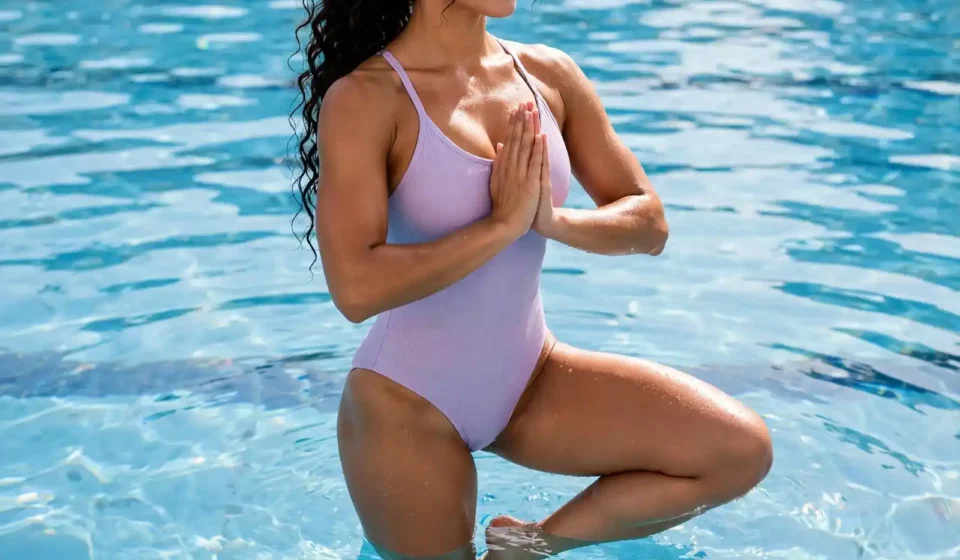

Looking for a gentle way to improve your movement, balance, and core strength? Aqua Pilates could be an interesting option to add to your fitness routine.
Aqua Pilates combines Pilates-inspired movements with the natural resistance and support of water. Instead of practising entirely on a mat, you perform controlled exercises in a swimming pool, where the water changes how your body moves and responds.
Aqua Pilates: Benefits and Beginner Exercises to Try This type of exercise can be suitable for people who enjoy water-based activities and want a different approach to low-impact fitness. It can also make familiar Pilates movements feel more challenging in some ways and more comfortable in others.
Whether you are new to Pilates or simply curious about exercising in a pool, this guide explains what Aqua Pilates is, its potential benefits, and beginner-friendly exercises you can try.
What Is Aqua Pilates?
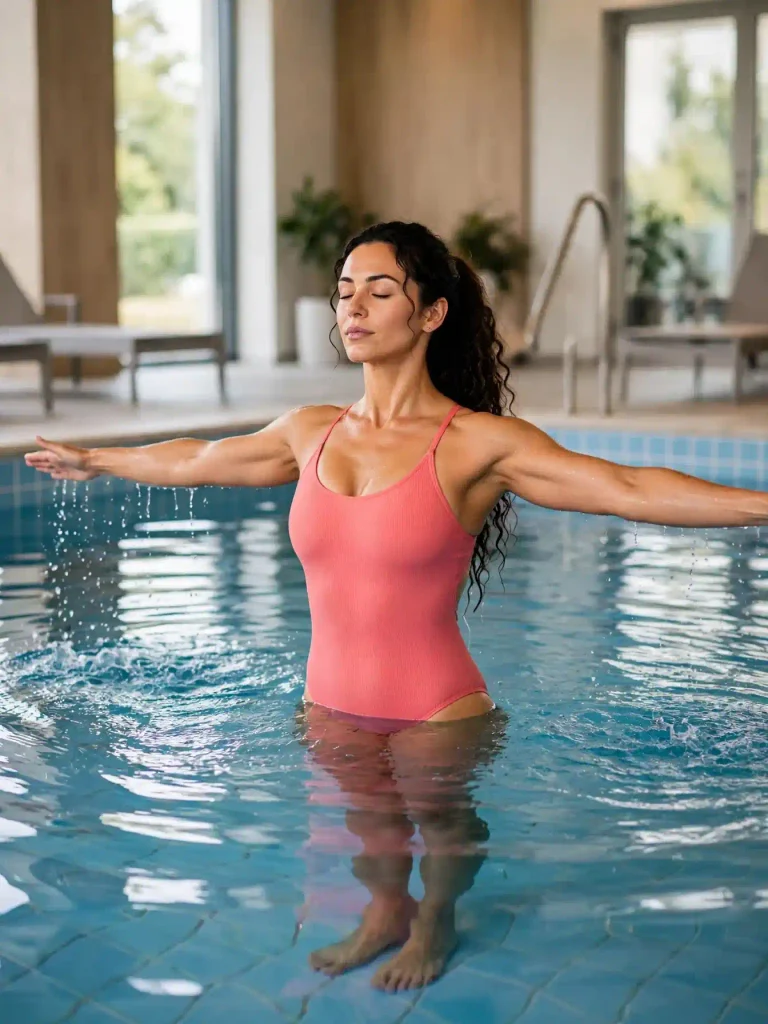
Aqua Pilates is a form of water-based exercise inspired by traditional Pilates principles. It focuses on controlled movements, breathing, posture, balance, and core engagement.
The exercises are performed in a swimming pool, usually in water shallow enough to stand comfortably. Some classes may also include floating equipment or pool accessories.
Water changes the way Pilates exercises feel because it provides:
- Natural resistance: Moving your arms and legs through water creates resistance.
- Buoyancy: Water supports part of your body weight, which can make certain movements feel more comfortable.
- Balance challenges: Water movement can require additional coordination and body control.
- A different workout environment: Exercising in a pool offers an alternative to traditional mat-based sessions.
Aqua Pilates is not exactly the same as traditional Pilates. The exercises are adapted to suit the water environment, and the intensity depends on the movements, water depth, and pace.
Benefits of Aqua Pilates
Aqua Pilates combines controlled exercise with the properties of water. Here are some potential benefits of including it in a balanced fitness routine.
1. Supports Core Strength
Many Pilates-inspired movements involve engaging the abdominal and surrounding core muscles.
In the water, you may need to control your body position while moving your arms and legs against resistance. This can provide an additional challenge for coordination and stability.
2. Offers Low-Impact Movement
Water buoyancy helps support the body, which can make some movements feel gentler than similar exercises performed on land.
This makes Aqua Pilates an interesting option for people who prefer lower-impact activities. However, it is not automatically suitable for every injury or health condition.
3. Improves Balance and Coordination
Water naturally moves around your body, creating small changes in resistance and stability.
Controlled movements in this environment can challenge your coordination and encourage greater awareness of body position.
4. Provides Natural Resistance
Water creates resistance whenever you move through it.
This means simple arm circles, leg movements, and standing exercises can become more challenging without traditional weights.
5. Encourages Controlled Movement
Pilates places importance on moving with control rather than rushing through repetitions.
Aqua Pilates follows a similar approach. Exercises are usually performed slowly and deliberately, with attention to breathing and technique.
6. Adds Variety to Your Fitness Routine
If you usually exercise at home or in a gym, pool-based Pilates offers something different.
It can complement activities such as walking, strength training, swimming, and traditional Pilates.
8 Beginner Aqua Pilates Exercises to Try
You do not need to know advanced Pilates movements to get started. These simple exercises introduce basic water resistance, balance, and controlled movement.
Choose a pool where you can stand comfortably, and make sure the water depth is appropriate for the exercises.
1. Water Marching
Water marching is a simple warm-up that helps you become comfortable moving in the pool.
How to do it:
- Stand upright in shallow water.
- Keep your feet comfortably apart.
- Slowly lift one knee.
- Lower your foot and repeat with the opposite leg.
- Continue alternating at a comfortable pace.
Beginner tip: Keep your movements controlled and avoid leaning too far backward or forward.
2. Standing Arm Circles
This exercise uses water resistance to introduce gentle upper-body movement.
How to do it:
- Stand with your feet comfortably apart.
- Extend your arms out to the sides.
- Make small circles with your hands.
- Gradually increase the circle size if comfortable.
- Reverse the direction.
Beginner tip: Keep your shoulders relaxed and avoid forcing your arms through the water.
3. Water Squats
Water squats are a simple way to practise lower-body movement while using the support of the pool.
How to do it:
- Stand with your feet about shoulder-width apart.
- Bend your knees and move your hips backward.
- Lower to a comfortable depth.
- Keep your chest lifted.
- Return slowly to standing.
Beginner tip: Keep your feet flat on the pool floor and use a nearby pool edge for support if needed.
4. Standing Knee Lifts
Standing knee lifts encourage controlled movement and balance.
How to do it:
- Stand upright in comfortable water depth.
- Lift your right knee slowly.
- Pause briefly.
- Lower your foot.
- Repeat with the left leg.
Beginner tip: Avoid swinging your body to lift your knee. Use a stable pool edge for support if necessary.
5. Side Leg Raises
This exercise introduces gentle movement around the hips.
How to do it:
- Stand upright beside the pool wall.
- Hold the edge lightly for balance.
- Move one leg out to the side.
- Keep your upper body steady.
- Return slowly and switch legs.
Beginner tip: Use a small range of motion and avoid twisting your hips.
6. Heel Raises
Heel raises help you practise controlled ankle and calf movement.
How to do it:
- Stand with your feet hip-width apart.
- Slowly lift your heels.
- Rise onto the balls of your feet.
- Pause briefly.
- Lower your heels gently.
Beginner tip: Keep your movements smooth and use the pool edge for balance if needed.
7. Standing Torso Rotations
This exercise encourages gentle movement through your upper body.
How to do it:
- Stand comfortably with your feet apart.
- Bend your elbows and bring your hands in front of your chest.
- Slowly rotate your upper body to one side.
- Return to the centre.
- Repeat on the opposite side.
Beginner tip: Keep your hips facing forward and avoid forcing the rotation.
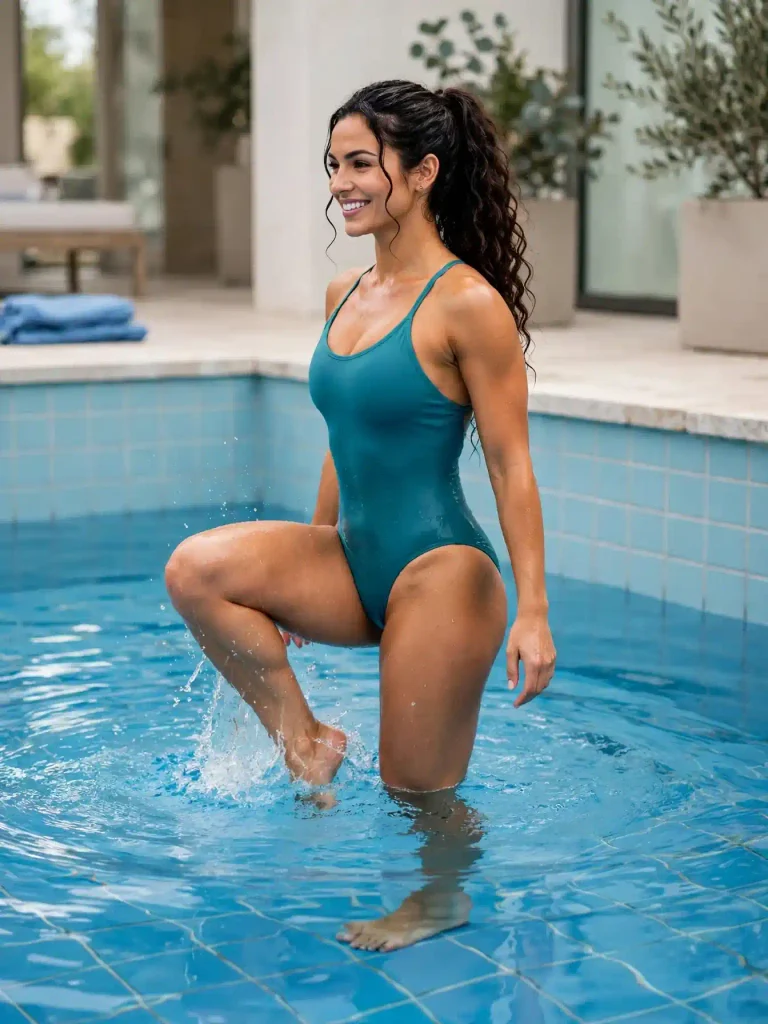
8. Water Leg Extensions
Water leg extensions provide a controlled way to move your legs against water resistance.
How to do it:
- Stand upright and hold the pool edge if needed.
- Extend one leg gently forward.
- Keep your upper body steady.
- Return your foot to the starting position.
- Repeat with the other leg.
Beginner tip: Avoid locking your knee or moving your leg too quickly.
A Simple 20-Minute Aqua Pilates Workout for Beginners
Once you feel comfortable with the individual movements, you can combine them into a short pool workout.
| Workout section | Exercise | Duration |
|---|---|---|
| Warm-up | Water marching | 3 minutes |
| Main workout | Standing arm circles | 2 minutes |
| Main workout | Water squats | 2 minutes |
| Main workout | Standing knee lifts | 2 minutes |
| Main workout | Side leg raises | 2 minutes |
| Main workout | Heel raises | 2 minutes |
| Main workout | Standing torso rotations | 2 minutes |
| Main workout | Water leg extensions | 2 minutes |
| Cool-down | Gentle water walking | 3 minutes |
Total: 20 minutes
Move at a comfortable pace and take breaks whenever needed. If you are completely new to pool exercise, start with a shorter session and fewer movements.
Aqua Pilates vs. Traditional Pilates
Both styles use controlled movements and focus on body awareness, but the workout environment creates some differences.
| Feature | Aqua Pilates | Traditional Pilates |
|---|---|---|
| Environment | Swimming pool | Mat or Pilates equipment |
| Resistance | Natural water resistance | Body weight, springs, or equipment |
| Support | Water buoyancy | Mat or equipment |
| Balance | Water movement can add challenges | Controlled movements on land |
| Equipment | Pool access and optional accessories | Mat or specialised equipment |
| Experience | Water-based exercise | Land-based exercise |
Neither style is automatically better. Your choice depends on your preferences, access to a pool, and the type of movement you enjoy.
What Equipment Do You Need for Aqua Pilates?
One advantage of Aqua Pilates is that you do not need much equipment to try basic exercises.
Useful items may include:
- Swimwear: Choose comfortable clothing suitable for pool exercise.
- Water shoes: These may help provide grip on suitable pool surfaces.
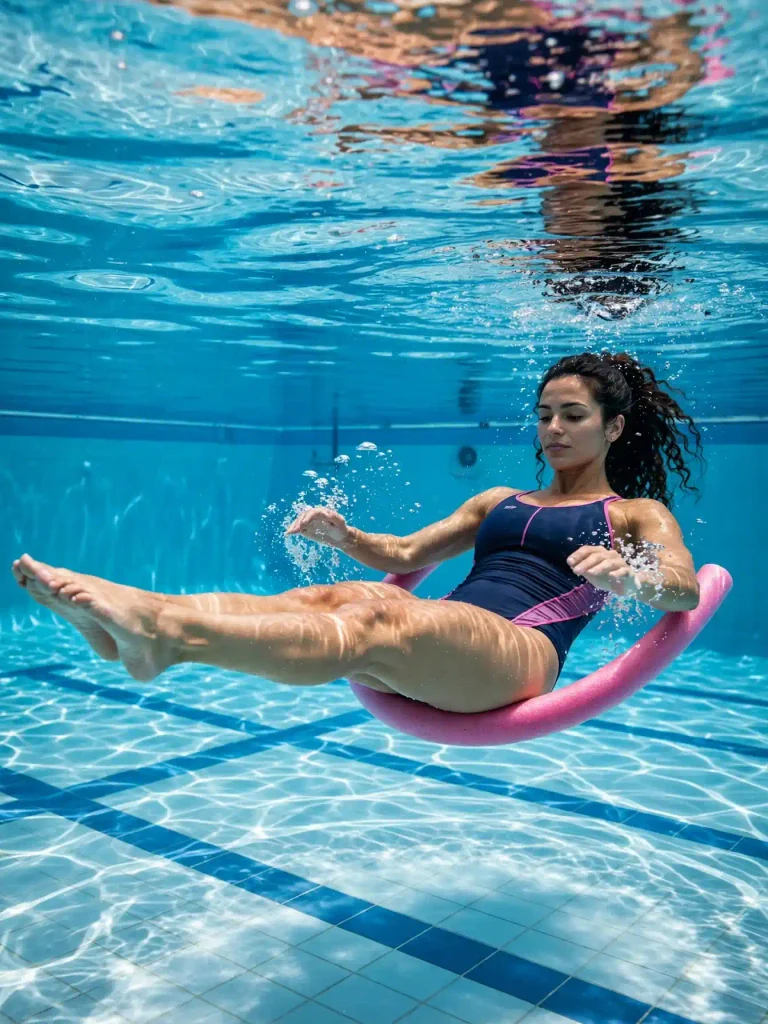
- Pool noodles: Some classes use them for support or modified exercises.
- Water dumbbells: These create additional resistance and are optional.
- A towel and water bottle: Useful for before and after your session.
Always follow the swimming pool’s equipment and safety rules.
Tips for Your First Aqua Pilates Class
If you are planning to attend your first class, a little preparation can make the experience more comfortable.
Choose a Beginner-Friendly Class
Look for a class that introduces basic movements and allows participants to work at different levels.
Arrive Early
Give yourself enough time to become familiar with the pool area and ask the instructor about the exercises.
Focus on Technique
Move slowly and pay attention to your posture and breathing. You do not need to perform every movement perfectly.
Use Support When Needed
A pool edge or suitable pool equipment can help you maintain balance during certain exercises.
Stay Hydrated
You can still become dehydrated while exercising in water. Drink water before and after your session.
Take Breaks
Rest whenever you need to. Your first session should be about learning the movements rather than completing the longest possible workout.
Safety Tips for Aqua Pilates
Pool exercise has its own safety considerations. Keep these points in mind before getting started:
- Exercise in a supervised swimming pool.
- Choose water that is shallow enough for you to stand comfortably.
- Avoid slippery pool edges.
- Do not attempt movements beyond your swimming or balance ability.
- Follow the instructor’s guidance.
- Stop if you experience dizziness, pain, or unusual discomfort.
- Avoid exercising in water that feels too cold or too warm for your comfort.
If you have a medical condition, an injury, or concerns about exercising in water, consult a qualified healthcare professional before starting.
Frequently Asked Questions
Is Aqua Pilates good for beginners?
Yes. Basic Aqua Pilates exercises can be adapted for beginners. Start with simple standing movements, use support when needed, and follow an instructor who understands beginner modifications.
Is Aqua Pilates better than regular Pilates?
Neither is universally better. Aqua Pilates offers water resistance and buoyancy, while traditional Pilates provides a land-based approach to controlled strength and movement exercises.
Can you do Aqua Pilates without swimming?
Some beginner exercises can be performed while standing in shallow water. However, you should be comfortable in the pool environment and follow appropriate water safety guidance.
How often should you do Aqua Pilates?
Beginners can start with one or two sessions per week, depending on their comfort and other activities. Allow time for recovery and adjust the schedule to your needs.
Does Aqua Pilates require special equipment?
No. Many beginner movements only require a swimming pool and suitable swimwear. Optional equipment may be used in organised classes.
Can Aqua Pilates be combined with walking and strength training?
Yes. Aqua Pilates can complement walking and strength training as part of a varied fitness routine. Plan your sessions so you have enough time to recover.
How long should an Aqua Pilates session last?
A beginner session might last around 15–20 minutes, including a warm-up and cool-down. You can gradually adjust the duration as you become more comfortable.
Final Thoughts
Aqua Pilates offers a refreshing way to explore Pilates-inspired movement in a swimming pool. By combining controlled exercises with natural water resistance and buoyancy, it provides a different approach to core work, balance, coordination, and general fitness.
Exercises such as water marching, standing arm circles, water squats, and side leg raises are simple ways to introduce yourself to this activity.
Start with basic movements, choose a safe pool environment, and focus on comfort and technique. The goal is to find a form of exercise you enjoy and can include in a balanced fitness routine.


[…] This makes foam rolling an accessible option for people who want to add a simple recovery habit to their routine. […]