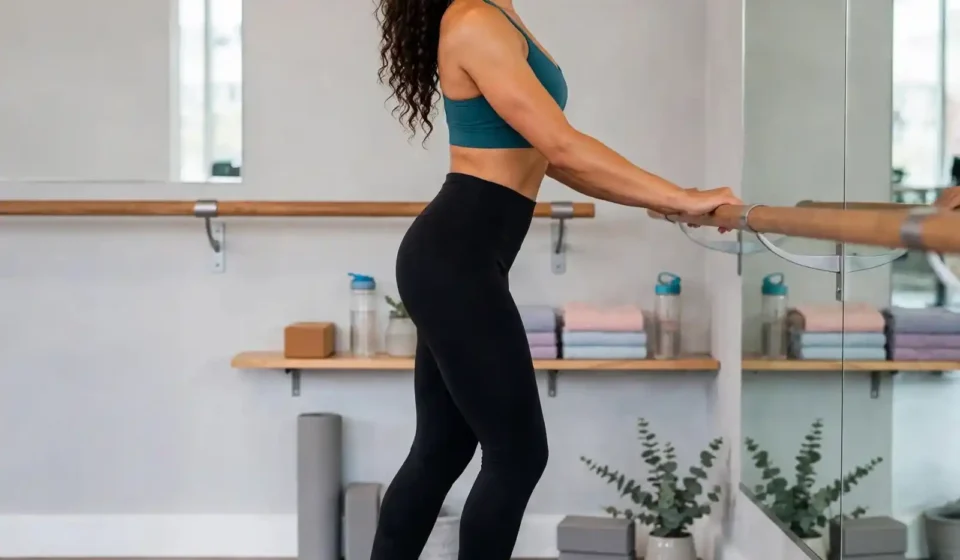

Barre workouts are a great way to introduce gentle strength training, improve balance, and develop better movement control without relying on high-impact exercises. Inspired by ballet, Pilates, and traditional fitness training, barre combines controlled movements, small repetitions, and bodyweight exercises to create an effective full-body workout.
If you are new to barre, you might think you need dance experience or professional equipment to get started. Fortunately, that is not the case. Most beginner barre exercises can be performed at home using a sturdy chair or countertop for balance.
Barre Workout for Beginners: 10 Low-Impact Exercises One of the reasons barre has become popular is its combination of strength, flexibility, and stability exercises. Rather than focusing on heavy weights or fast movements, it encourages you to work with control, maintain proper posture, and engage different muscle groups throughout each session.
For beginners, barre can also be a convenient way to add variety to an existing fitness routine. You can practice short workouts at home, combine barre with walking or cycling, and gradually become more comfortable with different movements.
In this guide, you will discover how barre workouts work, their main benefits, 10 beginner-friendly exercises, and how to create a simple weekly barre routine at home.
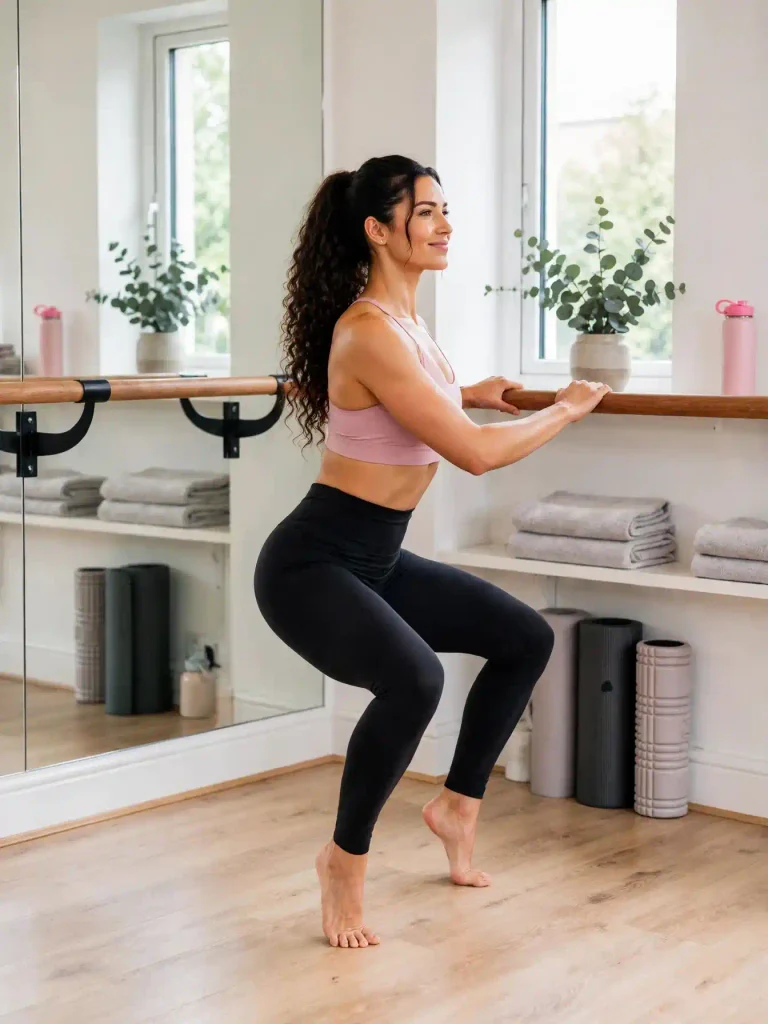
What Is Barre Fitness?
Barre fitness is a low-impact workout style inspired by ballet movements, Pilates, and strength training.
Traditional ballet exercises use a horizontal barre for balance and support. Barre fitness classes adapt some of these movements into accessible exercises designed for general fitness rather than dance performance.
A typical barre session may include:
- Small controlled movements.
- Repeated lower-body exercises.
- Standing balance movements.
- Core-strengthening exercises.
- Static muscle holds.
- Gentle stretching.
Most workouts use bodyweight, although some instructors introduce light resistance bands or small exercise weights.
The main objective is to develop strength, muscular endurance, coordination, and movement control.
Why Are Barre Workouts Good for Beginners?
Barre offers several advantages for people who want to explore a different style of exercise.
1. Builds Functional Strength
Many barre exercises involve movements that challenge your legs, glutes, abdominal muscles, and upper body.
Exercises such as pliés, standing leg lifts, and bridges encourage controlled muscle engagement.
Practicing these movements regularly can support general strength and muscular endurance.
2. Develops Better Balance
Balance is an important part of everyday movement.
Barre exercises often involve shifting your weight between your feet, standing on one leg, or maintaining a controlled position.
These movements help you practice coordination and stability.
3. Supports Flexibility
Barre workouts often include gentle stretching and movements that take your joints through comfortable ranges of motion.
This can help you develop better movement awareness and maintain flexibility as part of an active lifestyle.
4. Offers a Low-Impact Alternative
Most beginner barre exercises avoid jumping and rapid movements.
This makes barre a useful alternative for people who prefer controlled, lower-impact exercise.
However, always adapt movements to your comfort level and avoid forcing uncomfortable positions.
5. Can Be Done Almost Anywhere
You do not need a professional ballet studio to practice barre.
A small space at home, an exercise mat, and a sturdy chair can provide everything you need for many beginner exercises.
10 Low-Impact Barre Exercises to Try at Home
The following movements introduce some of the most common exercises found in beginner barre routines.
Perform each exercise slowly and focus on maintaining comfortable alignment.
Každá může cvičit jako baletka. Barre kombinuje jógu a pilates a formuje tělo i mysl – Žena.cz
1. Standing Plié
Dynamic Barre – Live Class – Sleek Ballet Fitness | Ballet and Barre Workouts
The standing plié is a basic ballet-inspired movement that helps strengthen the lower body.
How to perform it:
- Stand upright with your feet slightly wider than hip-width.
- Turn your toes outward slightly if comfortable.
- Hold a sturdy chair for balance.
- Bend your knees slowly.
- Keep your chest lifted and your feet grounded.
- Return to standing with control.
Recommended repetitions: 10–12.
Main muscles: Quadriceps, glutes, and inner thighs.
2. Standing Side Leg Lift
This exercise focuses on hip stability and controlled leg movement.
How to perform it:
- Stand beside a chair.
- Place one hand on the chair for support.
- Keep your torso upright.
- Lift one leg gently to the side.
- Avoid leaning your body in the opposite direction.
- Lower your leg slowly.
Recommended repetitions: 10 per side.
Main muscles: Glutes and hip abductors.
3. First Position Calf Raises
One Simple Move for Insanely Toned Legs
Calf raises are useful for strengthening the lower legs and practicing balance.
How to perform it:
- Stand with your heels close together.
- Hold a chair or countertop lightly.
- Slowly lift both heels.
- Pause briefly.
- Lower your heels back to the floor.
Recommended repetitions: 12–15.
Main muscles: Calves.
4. Standing Glute Extensions
How To Do a Plié, According to Experts. Nike PH
Standing glute extensions introduce controlled backward leg movement.
How to perform it:
- Stand facing a stable chair.
- Place both hands on the support.
- Keep your abdominal muscles gently engaged.
- Extend one leg behind you.
- Avoid arching your lower back.
- Return to the starting position.
Recommended repetitions: 10 per leg.
Main muscles: Glutes and hamstrings.
5. Second Position Plié Pulses
Barre Workout for Beginners | WW Australia
This variation uses small controlled movements to challenge lower-body muscular endurance.
How to perform it:
- Stand with your feet wider than hip-width.
- Turn your toes slightly outward.
- Bend your knees into a comfortable plié.
- Perform small, controlled up-and-down movements.
- Keep your upper body upright.
Recommended repetitions: 8–10 gentle pulses.
Main muscles: Quadriceps, glutes, and inner thighs.
6. Glute Bridge
Adult beautiful woman working out over light background
The glute bridge is a useful floor exercise often included in barre-inspired routines.
How to perform it:
- Lie on your back with your knees bent.
- Keep your feet flat on the floor.
- Rest your arms beside your body.
- Lift your hips gently.
- Pause briefly at the top.
- Lower your hips slowly.
Recommended repetitions: 10–12.
Main muscles: Glutes, hamstrings, and core.
7. Standing Knee Lift
Standing knee lifts help develop balance and coordination.
How to perform it:
- Stand upright beside a sturdy chair.
- Hold the support lightly.
- Lift one knee toward a comfortable height.
- Keep your torso steady.
- Lower your foot slowly.
- Repeat with the opposite leg.
Recommended repetitions: 10 per side.
Main muscles: Hip flexors and core stabilizers.
8. Bird Dog
Diastasis Recti Exercises to Help Heal Your Core
Bird dog is a beginner-friendly movement that helps develop core stability and coordination.
How to perform it:
- Start on your hands and knees.
- Keep your hands below your shoulders.
- Extend your right arm forward.
- Extend your left leg backward.
- Return slowly to the starting position.
- Switch sides.
Recommended repetitions: 8 per side.
Main muscles: Core, back, and glutes.
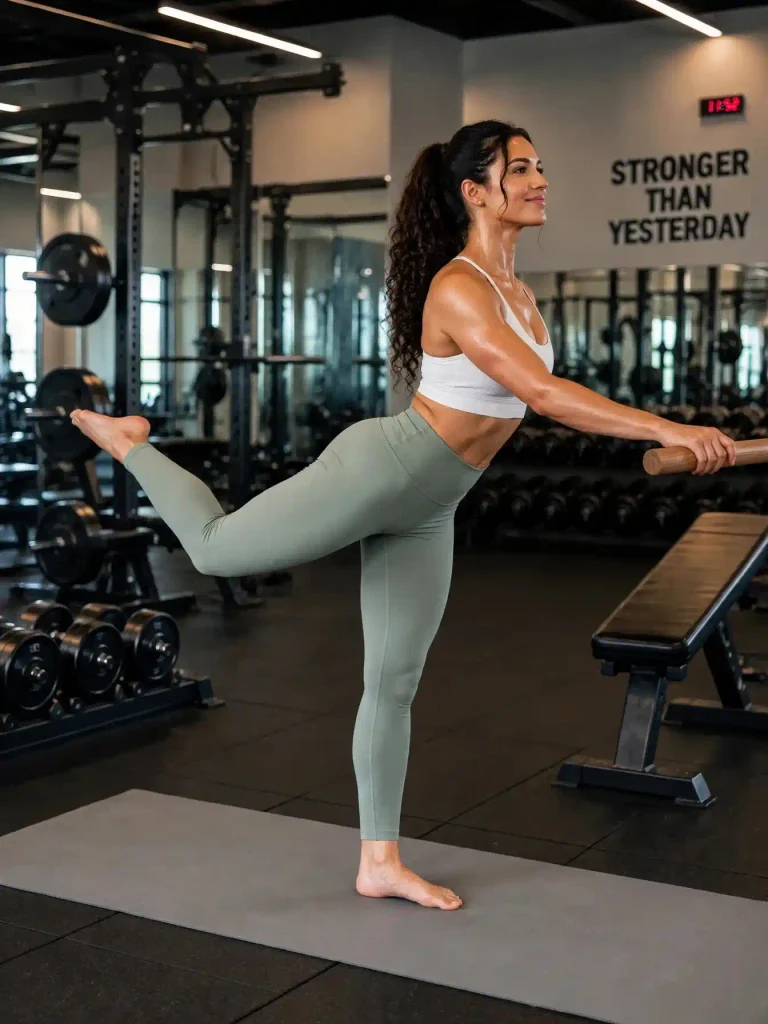
9. Standing Arabesque
Грудь сжалась, плечи упали, дыхание исчезло: как балетное дыхание расправляет тело
The arabesque is a ballet-inspired movement that challenges balance and hip control.
How to perform it:
- Stand behind a chair or barre.
- Hold the support gently.
- Shift your weight onto one foot.
- Extend your opposite leg behind you.
- Keep your upper body stable.
- Return slowly and repeat on the other side.
Recommended repetitions: 8 per side.
Main muscles: Glutes, hamstrings, and core stabilizers.
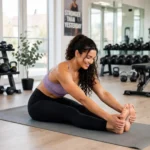
10. Seated Hamstring Stretch
Effective Exercises and Stretches for Sciatica Relief – Relax The Back
Finish your routine with a gentle stretch for the back of your legs.
How to perform it:
- Sit on an exercise mat.
- Extend your legs comfortably in front of you.
- Keep your back long.
- Lean forward gently from your hips.
- Stop when you feel a comfortable stretch.
- Hold while breathing naturally.
Recommended duration: 15–20 seconds.
Main muscles stretched: Hamstrings and lower-back muscles.
A Simple 20-Minute Barre Workout for Beginners
You can combine the exercises above into one simple home workout.
| Exercise | Repetitions |
|---|---|
| Gentle warm-up | 3 minutes |
| Standing Plié | 12 |
| Standing Side Leg Lift | 10 per side |
| Calf Raises | 12 |
| Glute Extensions | 10 per side |
| Plié Pulses | 10 |
| Glute Bridge | 12 |
| Standing Knee Lift | 10 per side |
| Bird Dog | 8 per side |
| Standing Arabesque | 8 per side |
| Hamstring Stretch | 20 seconds |
Take short breaks whenever needed. You can also split the workout into shorter sessions while learning the movements.
How to Create a Weekly Barre Workout Schedule
A consistent schedule can help you develop a regular exercise habit without making your routine too demanding.
Here is an example of a beginner-friendly weekly plan:
| Day | Workout |
|---|---|
| Monday | 20-minute beginner barre |
| Tuesday | Easy walking |
| Wednesday | Rest |
| Thursday | 20-minute barre workout |
| Friday | Gentle mobility exercises |
| Saturday | Walking or cycling |
| Sunday | Rest |
You can adjust the schedule according to your experience, energy levels, and other activities.
Equipment Needed for Barre Workouts
One advantage of barre fitness is that you can practice many exercises without specialized equipment.
Master Your Barre Workout Workflow for Optimal Health — Amrita Yoga & Wellness
Yoga & Pilates Mats – Extra Thick, Non Slip, Hot Yoga | ProsourceFit
9
Useful items include:
- A sturdy chair: Provides balance and support during standing exercises.
- An exercise mat: Makes floor movements more comfortable.
- Comfortable clothing: Allows you to move freely.
- Grip socks: Can improve traction on suitable indoor flooring.
- Resistance bands: Optional for adding variety to selected movements.
- Water bottle: Keeps water nearby during exercise.
Start with the basics and add equipment only when you find it useful.
Common Barre Workout Mistakes Beginners Should Avoid
Learning proper technique is important when starting any new exercise program.
Here are some mistakes to watch out for:
Moving too quickly: Barre focuses on controlled movements. Slow down and pay attention to your positioning.
Forcing deep pliés: You do not need to bend your knees deeply. Use a comfortable range of motion.
Arching your back: Maintain a comfortable spine position during standing leg extensions and arabesques.
Ignoring balance support: Use a chair whenever necessary rather than struggling to maintain your position.
Skipping warm-ups: Start with a few minutes of gentle movement to prepare your body.
Doing too much too soon: Begin with manageable sessions and allow time to become familiar with each exercise.
Barre vs Pilates: What Is the Difference?
Barre and Pilates share several similarities, but they are not exactly the same.
| Feature | Barre | Pilates |
|---|---|---|
| Main inspiration | Ballet and strength training | Joseph Pilates’ movement system |
| Main focus | Balance and muscular endurance | Core stability and movement control |
| Typical movements | Pliés, pulses, leg lifts | Bridges, controlled extensions, core exercises |
| Equipment | Chair or ballet barre | Mat or reformer |
| Workout style | Repeated small movements | Controlled, structured sequences |
Both can be useful additions to a balanced fitness routine.
Barre may appeal to people who enjoy ballet-inspired movements, while Pilates may be a better starting point for those interested in structured core-focused exercise.
You can also alternate between the two styles during the week.
Final Thoughts
Barre workouts provide a beginner-friendly way to explore low-impact strength training, balance, flexibility, and controlled movement. By combining simple ballet-inspired exercises with traditional fitness movements, you can create an enjoyable workout routine without needing expensive equipment.
The 10 exercises in this guide offer a practical starting point for practicing barre at home. Begin slowly, focus on comfortable movement, and gradually build your confidence as you become familiar with the exercises.
Remember that the best workout routine is one that fits your lifestyle and allows you to stay active consistently. With patience and regular practice, barre can become a valuable part of your overall fitness routine.