

Heart rate data can tell you more about your cardio workouts than you might think. Whether you enjoy walking, running, cycling, swimming, or using a treadmill, monitoring your heart rate can help you understand how your body responds to exercise.
How to Use Heart Rate Data to Improve Your Cardio Workouts Many fitness watches and heart rate monitors now provide real-time readings, workout summaries, and estimated heart rate zones. However, seeing these numbers is only the first step. The real benefit comes from understanding what they mean and using them to make sensible training decisions.
For beginners, heart rate tracking can be especially useful. It can help you recognise when an activity feels easy, understand how workout intensity changes, and avoid making every session unnecessarily challenging.
In this guide, you will learn how to use heart rate data to improve your cardio workouts, understand common heart rate measurements, and build a balanced routine that supports your fitness goals.

What Is Heart Rate Data?
Heart rate is the number of times your heart beats per minute, usually shown as BPM (beats per minute).
During physical activity, your heart rate generally increases because your muscles need more oxygen. The amount it rises depends on several factors, including exercise intensity, fitness level, temperature, hydration, stress, and recovery.
A heart rate monitor measures this activity and displays your readings during or after exercise.
Common devices that track heart rate include:
- Smartwatches
- Fitness trackers
- Chest strap heart rate monitors
- Some exercise machines
- Smart rings that offer heart-related measurements
These devices can help you observe patterns over time, although their readings are estimates and may not always be perfectly accurate.
Why Is Heart Rate Monitoring Useful for Cardio?
Heart rate monitoring gives you another way to understand workout intensity. Instead of relying only on speed, distance, or calories, you can also see how your cardiovascular system responds to different activities.
Here are some practical benefits.
1. Understanding Workout Intensity
Two people can walk or run at the same speed while experiencing different levels of effort. Heart rate data provides additional information about how challenging an activity may be for each person.
For example, a comfortable walk might feel easy for one person but more demanding for another.
2. Recognising Easier and Harder Sessions
Heart rate readings can help you distinguish between lighter cardio sessions and more demanding workouts.
This is useful because a balanced routine should not require every session to feel difficult. Easier sessions provide an opportunity to build consistency without constantly pushing your limits.
3. Tracking Changes Over Time
When you regularly perform similar activities under similar conditions, your heart rate readings may help you notice changes in your response to exercise.
For example, you might notice that a familiar walking route feels easier than it did several weeks earlier.
4. Supporting Recovery Awareness
Some devices measure resting heart rate and other recovery-related indicators. Looking at these measurements alongside sleep, stress, and how you feel can help you decide whether to choose a lighter activity or take a rest day.
No single number should determine whether you exercise. Your overall well-being matters too.
Understanding the Main Heart Rate Measurements
Before using heart rate data, it helps to understand the most common measurements.
Resting Heart Rate
Resting heart rate is the number of times your heart beats per minute when you are relaxed and resting.
Fitness trackers often measure it during periods of sleep or inactivity.
Looking at longer-term patterns can be more useful than focusing on one reading. Resting heart rate can change because of stress, illness, sleep quality, hydration, and other factors.
Average Workout Heart Rate
Average heart rate shows your estimated average BPM throughout an exercise session.
It can help you compare similar workouts, such as two walks or cycling sessions completed under comparable conditions.
However, an average can hide changes in intensity. A workout with several harder intervals and recovery periods may have the same average as a steady session.
Maximum Workout Heart Rate
Maximum workout heart rate is the highest reading recorded during a session.
It can help show when your effort increased, but it should not be treated as a target that you need to reach.
A brief high reading may also be caused by measurement errors, particularly with wrist-based devices.
Heart Rate Recovery
Heart rate recovery describes how your heart rate changes after you stop exercising or reduce your activity.
Some fitness devices calculate this automatically.
It is important to remember that heart rate recovery can be influenced by the type of exercise, the recovery conditions, temperature, fitness level, and measurement accuracy. It is best interpreted as a longer-term trend rather than a standalone measure of health.
Understanding Heart Rate Training Zones
Heart rate zones divide exercise intensity into different ranges. Many fitness trackers use five zones to describe how hard your cardiovascular system is working.
The traditional five-zone model is often based on a percentage of estimated maximum heart rate.
| Zone | Percentage of estimated maximum HR | General description |
|---|---|---|
| Zone 1 | 50–60% | Very light activity |
| Zone 2 | 60–70% | Light to moderate effort |
| Zone 3 | 70–80% | Moderate to challenging effort |
| Zone 4 | 80–90% | Hard effort |
| Zone 5 | 90–100% | Very hard effort |
These percentages are general training estimates, not personalised medical limits. Different devices and training systems may calculate zones differently.
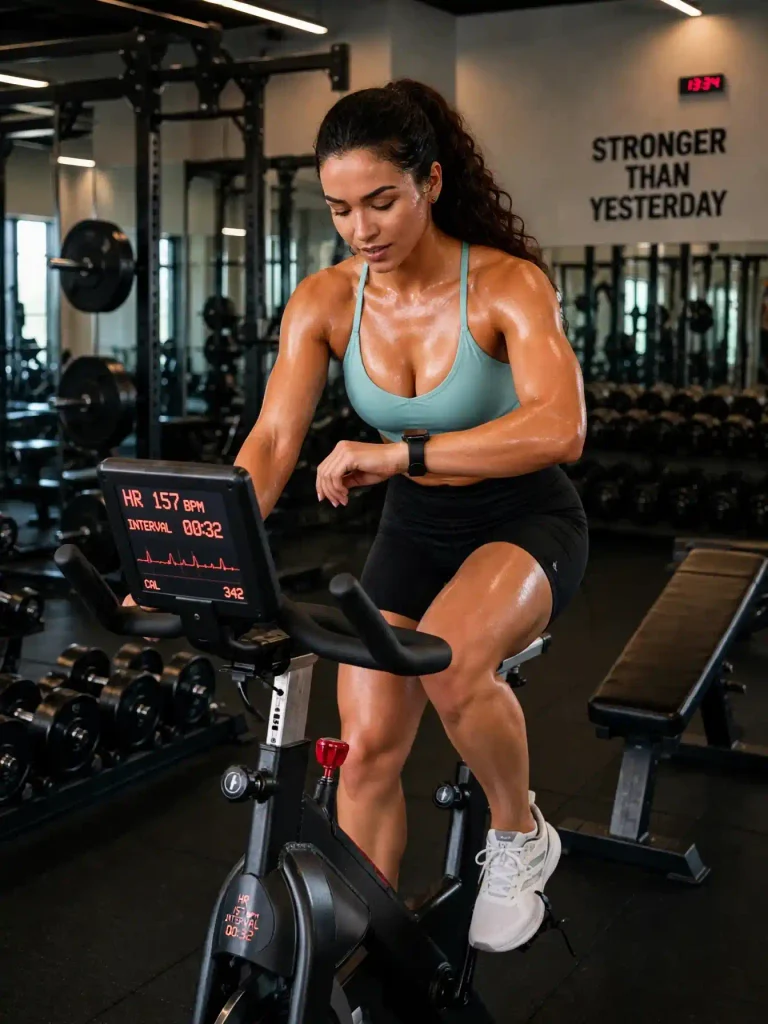
Zone 1: Very Light Activity
This zone includes gentle walking and easy movement. It is useful for warming up, cooling down, and comfortable recovery activities.
Zone 2: Light to Moderate Activity
This zone is often associated with steady aerobic exercise. Activities may include brisk walking, relaxed cycling, or comfortable jogging.
A useful way to recognise this intensity is the talk test: you should generally be able to speak in complete sentences.
Zone 3: Moderate to Challenging Activity
Exercise in this zone feels more demanding. Breathing becomes noticeably faster, although you may still be able to speak in shorter sentences.
Some people reach this intensity during brisk uphill walking, steady running, or faster cycling.
Zone 4: Hard Activity
This zone represents a high level of effort. It is more demanding and generally requires more recovery than easy cardio.
It is not necessary for every workout, particularly if you are new to exercise.
Zone 5: Very Hard Activity
This is the highest traditional heart rate zone. It is associated with very intense effort and is not something beginners need to target.
For general fitness, a variety of comfortable and moderately challenging activities can be useful without regularly exercising at maximum intensity.
How to Use Heart Rate Data During Your Cardio Workouts
Understanding the numbers is helpful, but knowing how to apply them is even more important.
Here are practical ways to use your heart rate data.
1. Start by Establishing Your Usual Readings
Before making changes to your training, spend some time observing your normal heart rate patterns.
Record a few ordinary workouts and note:
- The type of activity
- Workout duration
- Average heart rate
- How challenging the session felt
- Your energy level afterward
This information creates a personal reference point.
Avoid comparing your readings directly with another person’s numbers. Age, genetics, fitness level, medication, and many other factors can affect heart rate.
2. Use the Talk Test Alongside Your Monitor
Your fitness tracker is useful, but it should not be the only way you judge exercise intensity.
The talk test provides a simple way to understand how hard you are working:
- Easy: You can speak comfortably.
- Moderate: You can talk, but your breathing is faster.
- Hard: Speaking becomes difficult and you can only manage a few words.
For most beginners, comfortable and moderate activities are good places to start.
If your watch shows a reading that does not match how you feel, do not automatically chase the number.
3. Adjust Your Walking or Running Pace
Heart rate data can help you understand how different speeds affect your effort.
For example, if you are walking and your heart rate rises more than expected, you can slow down and see whether your breathing becomes more comfortable.
Similarly, if a familiar pace feels easier over time, your workout records may help you recognise that change.
Always consider hills, weather, sleep, stress, and other conditions when comparing sessions.
4. Include Different Types of Cardio
A balanced cardio routine does not need to involve the same workout every day.
You can combine:
- Comfortable walking
- Brisk walking
- Easy cycling
- Swimming
- Light jogging, if appropriate for your experience
- Low-impact cardio workouts
Heart rate data can help you understand how your body responds to each activity.
5. Review Your Workout After Finishing
Do not spend the entire workout looking at your watch. It is often more useful to review the information afterward.
Look at your average heart rate, workout duration, and how you felt during the session.
Ask yourself:
- Did the workout feel comfortable?
- Was the intensity appropriate?
- Did I have enough energy afterward?
- Would a lighter or more challenging session make sense next time?
Over time, these observations can help you make better training decisions.
A Beginner-Friendly Weekly Cardio Plan
Here is an example of how to combine different cardio activities during the week.
| Day | Cardio activity | Suggested duration |
|---|---|---|
| Monday | Comfortable walking | 20–30 minutes |
| Tuesday | Easy cycling | 20 minutes |
| Wednesday | Rest or gentle movement | Optional |
| Thursday | Brisk walking | 20–30 minutes |
| Friday | Rest | — |
| Saturday | Swimming or low-impact cardio | 20–30 minutes |
| Sunday | Comfortable outdoor walk | 20 minutes |
This is a flexible example, not a requirement. Adjust the duration and activities to your experience, schedule, and energy level.
If you are new to cardio, shorter sessions may be more comfortable. Build gradually rather than trying to complete every session at once.
How to Calculate Your Estimated Maximum Heart Rate
Some heart rate zone calculators use a simple formula:
Estimated maximum heart rate = 220 − age
For example, using this formula for a hypothetical 30-year-old:
220 − 30 = 190 BPM.
The estimated maximum heart rate would be approximately 190 beats per minute.
This formula is only a rough population-based estimate. It can differ considerably from an individual’s actual maximum heart rate, so it should not be used as a precise training limit or medical measurement.
For a more personalised training approach, a qualified exercise professional can help interpret your measurements and choose suitable intensity ranges.
Common Mistakes When Using Heart Rate Data
Heart rate tracking can be helpful, but it is easy to misunderstand the information.
Treating Every Reading as Exact
Fitness trackers can produce inaccurate readings because of movement, loose straps, skin contact, temperature, or device limitations.
Look for general patterns rather than treating every number as perfectly accurate.
Trying to Stay in One Zone All the Time
Not every workout needs to fit a specific heart rate zone. Some days should feel easier than others.
Your activity, experience, and personal goals should guide your routine.
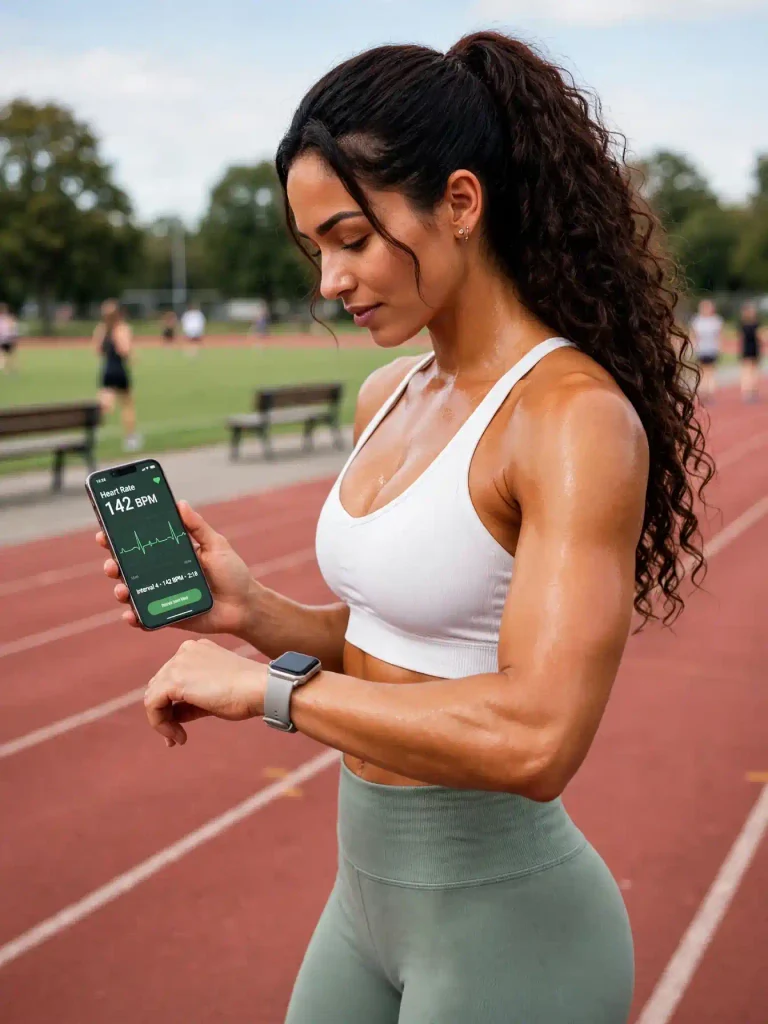
Ignoring How You Feel
A watch cannot fully measure tiredness, discomfort, stress, or how you feel during exercise.
Pay attention to your breathing, energy, and comfort as well as your device readings.
Comparing Your Numbers With Other People
Heart rate is individual. Two people doing the same workout can have different readings.
Focus on your own patterns rather than trying to match someone else’s numbers.
Increasing Intensity Too Quickly
A higher heart rate does not automatically mean a better workout. Increase exercise duration and difficulty gradually, allowing time for recovery.
How Accurate Are Fitness Trackers for Heart Rate Monitoring?
Modern fitness trackers can provide useful heart rate estimates, especially when monitoring general activity and longer-term trends.
However, accuracy depends on the device and activity.
Wrist-based monitors may become less accurate during activities that involve rapid arm movement, gripping equipment, or frequent changes in intensity.
Chest strap monitors measure electrical signals from the heart and are often preferred when more responsive exercise readings are needed.
To improve the quality of wrist-based measurements:
- Wear the device securely without making it uncomfortable.
- Follow the manufacturer’s positioning instructions.
- Keep the sensor area clean.
- Check whether the device is recording properly.
- Compare unusual readings with how you actually feel.
Remember that consumer fitness trackers are not a replacement for medical equipment or professional medical advice.
When Should You Be Careful With Heart Rate Training?
Heart rate readings can be affected by many factors, including illness, medication, dehydration, stress, temperature, and lack of sleep.
Some medications and health conditions can also change how heart rate responds to exercise. In these situations, standard heart rate zones may not be appropriate.
If you have a health condition, experience unusual symptoms during exercise, or are unsure which intensity is suitable, ask a healthcare professional for guidance.
Stop exercising and seek medical advice if you experience concerning symptoms such as chest pain, faintness, or unusual shortness of breath.
Frequently Asked Questions
What is a good heart rate during cardio?
There is no single ideal heart rate for everyone. It depends on age, fitness, activity type, health, medication, and exercise intensity.
For beginners, a comfortable pace where you can speak in complete sentences is a useful starting point.
Is Zone 2 cardio good for beginners?
Comfortable, steady cardio is often a practical starting point for beginners. The talk test can help you judge whether the intensity is manageable.
You do not need to focus on an exact Zone 2 number if your device’s estimated zones are uncertain.
Should I check my heart rate throughout a workout?
You can check it occasionally, but you do not need to watch it constantly. Focus on your movement, breathing, and comfort, then review the workout data afterward.
Why is my heart rate higher during some workouts?
Heart rate can change because of exercise intensity, temperature, stress, hydration, sleep, illness, and other factors.
A higher reading does not always mean your fitness has changed.
Can heart rate data show improvements in fitness?
It can provide useful clues when you compare similar workouts over time. For example, you may notice that a familiar activity feels easier or produces a different heart rate response.
However, heart rate alone cannot provide a complete picture of fitness.
Is a smartwatch accurate enough for cardio training?
A smartwatch can be useful for general monitoring and observing trends. However, wrist-based readings may be less reliable during certain activities or sudden changes in intensity.
For most recreational users, combining device readings with the talk test and personal comfort provides a practical approach.
Final Thoughts
Heart rate data can make cardio training easier to understand by showing how your body responds to different activities and levels of effort.
By learning about resting heart rate, average workout readings, heart rate zones, and recovery trends, you can make more informed decisions about your exercise routine.
The most important step is to use this information as a guide rather than a strict target. Combine your readings with the talk test, pay attention to how you feel, and give yourself enough time to recover.
Whether you prefer walking, cycling, swimming, or running, a balanced and consistent approach can help you build a sustainable cardio routine.