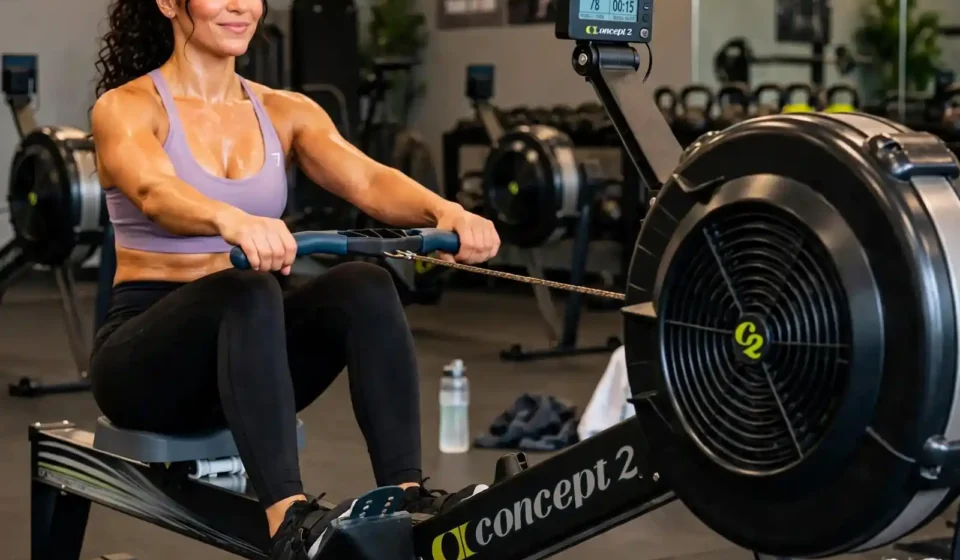

Indoor rowing is a great way to enjoy a full-body workout without needing to go outside. Whether you’re exercising at home or using a rowing machine at the gym, rowing can help improve cardiovascular fitness, coordination, and muscular endurance.
Indoor Rowing Workout for Beginners: A Complete Guide The best part? You don’t need to be an experienced athlete to get started. With the right technique, a comfortable pace, and a simple routine, beginners can gradually build confidence on the rowing machine.
In this guide, you’ll learn how indoor rowing works, how to use a rowing machine correctly, which muscles are involved, and how to follow a beginner-friendly workout.
What Is Indoor Rowing?
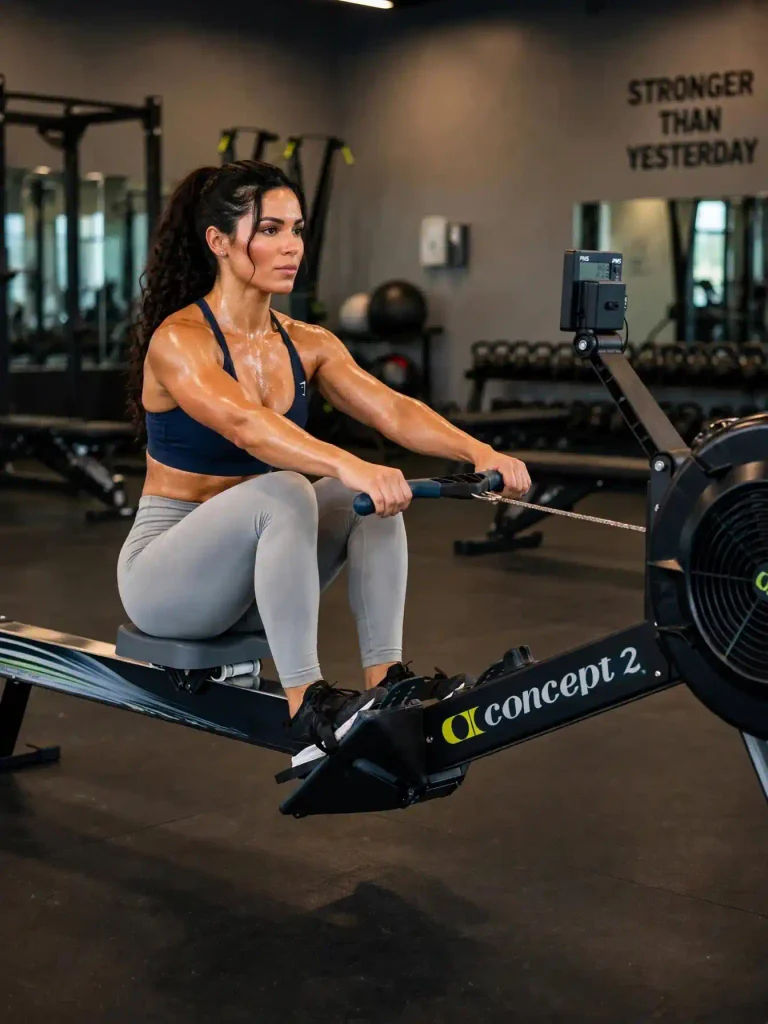
Indoor rowing is an exercise performed on a rowing machine, sometimes called an ergometer or rowing erg. The machine simulates the movement of rowing a boat through water.
As you move through each stroke, you use your legs, core, and upper body in a coordinated sequence. At the same time, the continuous movement challenges your heart and lungs.
Indoor rowing can be adjusted to different fitness levels by changing your pace, workout duration, and resistance settings.
Benefits of Indoor Rowing for Beginners
Rowing offers several benefits when practiced with good technique and an appropriate level of effort.
1. Supports Cardiovascular Fitness
Rowing is an aerobic activity that gets your heart beating faster and challenges your breathing. Practicing regularly can help improve your cardiovascular endurance over time.
2. Works Multiple Muscle Groups
Unlike exercises that focus on just one area, rowing involves several parts of the body during every stroke.
Your legs help drive the movement, your core helps stabilize your body, and your arms and back contribute to the pulling phase.
3. Builds Muscular Endurance
Repeated rowing strokes help your muscles become more comfortable with sustained activity. This can support everyday movements and other forms of exercise.
4. Provides a Low-Impact Workout
Your feet stay connected to the footplates while you row, so the movement generally involves less impact than activities such as running.
However, low-impact does not mean risk-free. Good technique and a suitable workout intensity are still important.
5. Helps Improve Coordination
Rowing requires your legs, torso, and arms to work together in a specific order. Learning this sequence can improve movement coordination and body awareness.
6. Easy to Adapt to Different Fitness Levels
You can begin with a few minutes of comfortable rowing and gradually increase your workout time as your fitness and technique improve.
Which Muscles Does Indoor Rowing Work?
Indoor rowing is considered a full-body exercise because it involves several major muscle groups.
- Legs: The quadriceps and glutes help power the drive.
- Hamstrings: These muscles assist with hip movement and help control the return.
- Core: The abdominal and back muscles help stabilize your torso.
- Upper back: Muscles around the shoulder blades contribute to the pulling movement.
- Arms: The biceps and forearms help guide the handle toward your body.
- Shoulders: The shoulder muscles assist with controlled arm movement.
The legs provide much of the power during a rowing stroke. Beginners should avoid relying only on their arms.
How to Use a Rowing Machine Correctly
Learning the correct rowing technique is more important than trying to row quickly. Each stroke has four main positions.
1. The Catch
<AsyncImage query=”indoor rowing machine athlete catch position side view proper rowing technique” aspectRatio=”16:9″ width=”100%”/>
The catch is the starting position.
- Sit near the front of the sliding seat.
- Bend your knees comfortably.
- Lean slightly forward from your hips.
- Keep your arms straight.
- Hold the handle with a relaxed grip.
Avoid rounding your lower back or forcing your knees into an uncomfortable position.
2. The Drive
<AsyncImage query=”rowing machine proper drive phase legs pushing side view exercise” aspectRatio=”16:9″ width=”100%”/>
The drive is the part where you push away from the machine.
Follow this sequence:
- Push through your legs.
- Lean your torso back slightly once your legs are mostly extended.
- Pull the handle toward your lower ribs.
Think of the movement as legs first, body second, and arms last.
3. The Finish
<AsyncImage query=”indoor rowing machine finish position correct posture side view” aspectRatio=”16:9″ width=”100%”/>
At the finish:
- Your legs should be extended without locking your knees.
- Your torso should lean back slightly.
- The handle should be close to your lower ribs.
- Your elbows should remain relaxed.
Keep your shoulders down instead of lifting them toward your ears.
4. The Recovery
<AsyncImage query=”rowing machine recovery phase athlete sliding forward side view” aspectRatio=”16:9″ width=”100%”/>
The recovery returns you to the starting position.
Follow the opposite sequence:
- Extend your arms forward.
- Lean your torso forward from the hips.
- Bend your knees and slide toward the catch.
Move smoothly and avoid rushing. The recovery should generally be slower than the drive.
Beginner Indoor Rowing Workout
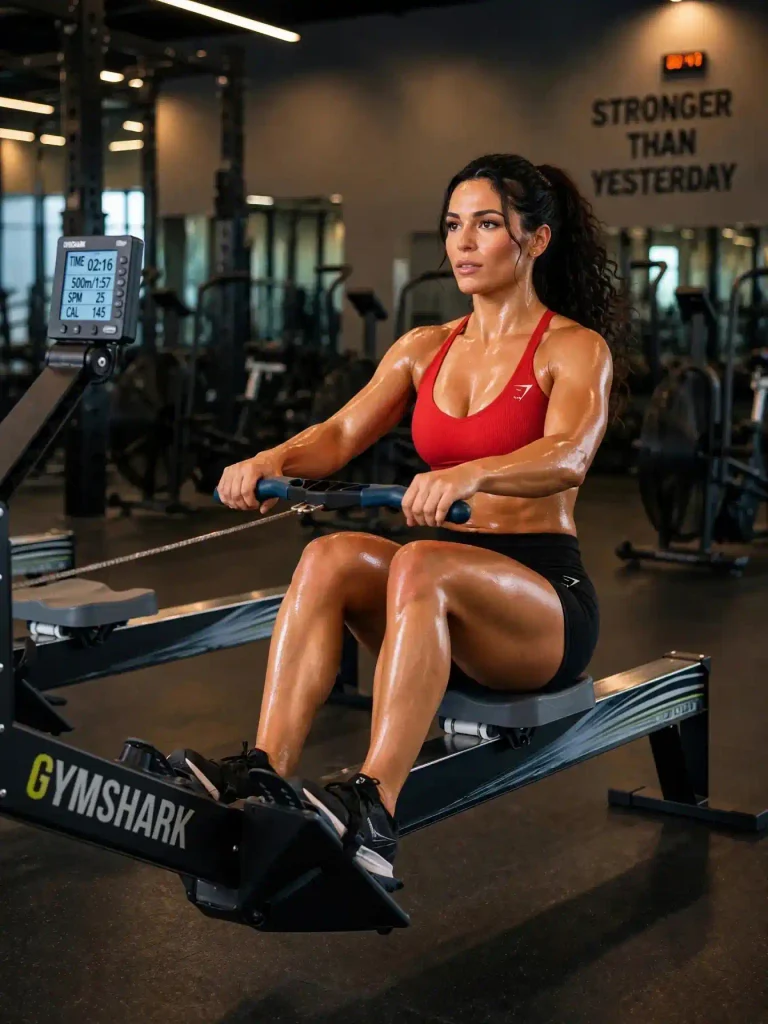
If you’re new to indoor rowing, start with a short session that gives you time to learn the movement.
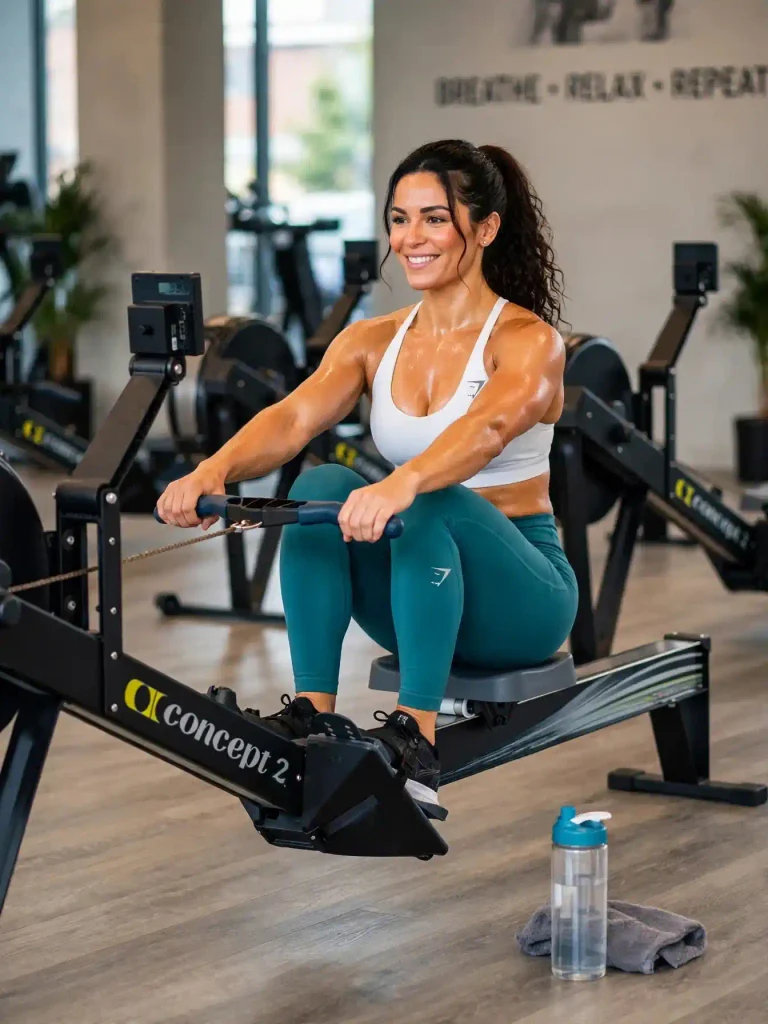
<AsyncImage query=”modern indoor rowing machine in bright simple gym workout setting” aspectRatio=”16:9″ width=”100%”/>
A Simple 15-Minute Rowing Session
| Workout Stage | Duration | What to Do |
|---|---|---|
| Warm-up | 3 minutes | Gentle rowing at an easy pace |
| Main workout | 8 minutes | Comfortable, steady rowing |
| Cool-down | 4 minutes | Gradually slow down and row gently |
Keep the effort comfortable enough that you can still speak in short sentences. If your technique starts to feel uncomfortable, slow down or take a break.
As you become more familiar with the machine, you can gradually extend the main rowing section.
Beginner Rowing Tips
A few simple habits can make your first rowing sessions more comfortable and productive.
Start Slowly
There is no need to row as fast as possible. Focus on learning the correct movement before increasing your pace.
Use Your Legs
Your legs should create much of the power. Avoid pulling hard with your arms before your legs have started the drive.
Keep Your Grip Relaxed
Hold the handle securely without squeezing it too tightly. A relaxed grip can help reduce unnecessary tension in your hands and forearms.
Maintain Good Posture
Keep your back comfortably neutral and your shoulders relaxed. Avoid rounding your lower back or leaning too far backward.
Choose a Comfortable Resistance
A higher resistance setting does not automatically mean a better workout. Begin with a manageable setting that allows you to move smoothly.
Give Yourself Time to Recover
Rest is an important part of any exercise routine. Beginners can start with two or three rowing sessions per week, leaving recovery time between sessions.
Common Indoor Rowing Mistakes to Avoid
Even a simple exercise can become uncomfortable when the technique is incorrect. Watch out for these common mistakes:
- Pulling with your arms too early: Start the drive with your legs.
- Rushing the recovery: Return to the starting position slowly and smoothly.
- Rounding your back: Maintain a comfortable, neutral spine.
- Setting resistance too high: Choose a setting that allows controlled movement.
- Moving too quickly: Prioritize technique over speed.
- Holding your breath: Breathe naturally throughout the exercise.
How Often Should Beginners Use a Rowing Machine?
A good starting point is two or three short sessions per week, depending on your experience and recovery.
For example:
| Day | Activity |
|---|---|
| Monday | 10–15 minutes of easy rowing |
| Tuesday | Rest or gentle walking |
| Wednesday | 10–15 minutes of easy rowing |
| Thursday | Rest |
| Friday | 10–15 minutes of comfortable rowing |
| Saturday | Optional light activity |
| Sunday | Rest |
This is only a sample schedule. Adjust it to your comfort, energy, and other physical activities.
You don’t need to row every day to benefit from the exercise. Consistency and good technique are more important than doing longer sessions.
Is Indoor Rowing Good for Beginners?
Yes. Indoor rowing can be a suitable activity for beginners because the pace and duration can be adjusted to individual ability.
It is especially useful for people who want to try a full-body cardiovascular activity without the repeated impact associated with running.
However, beginners should take time to learn proper technique. If you have an injury, ongoing pain, or a medical condition that affects exercise, ask a qualified healthcare professional for guidance before starting.
Stop exercising if you experience pain, dizziness, or unusual discomfort.
Frequently Asked Questions
Is 10 minutes of rowing enough for a beginner?
Yes. Ten minutes can be a useful starting point, especially when you’re learning the technique. You can gradually increase the duration as the movement becomes more familiar.
Should I row fast or slow as a beginner?
Start at a slow, comfortable pace. Once you can maintain good technique throughout the session, you can experiment with small changes in speed.
What is a good resistance setting for beginners?
There is no single setting that works for everyone. Choose a comfortable resistance that lets you complete each stroke smoothly without straining.
Can I use a rowing machine at home?
Absolutely. Many indoor rowing machines are designed for home use. Make sure you have enough space, a stable surface, and room for the handle and sliding seat to move safely.
Is rowing better than walking?
Both are useful forms of physical activity. Walking is simple and accessible, while rowing involves coordinated movement from the legs, core, and upper body. The best choice is an activity you enjoy and can practice comfortably.
Final Thoughts
Indoor rowing is a practical way for beginners to explore full-body exercise while improving cardiovascular fitness, coordination, and muscular endurance.
The key is to learn the correct rowing sequence, begin with short sessions, and increase your activity gradually. Focus on smooth movements rather than speed or resistance.
With patience and consistency, the rowing machine can become an enjoyable part of a balanced fitness routine.