
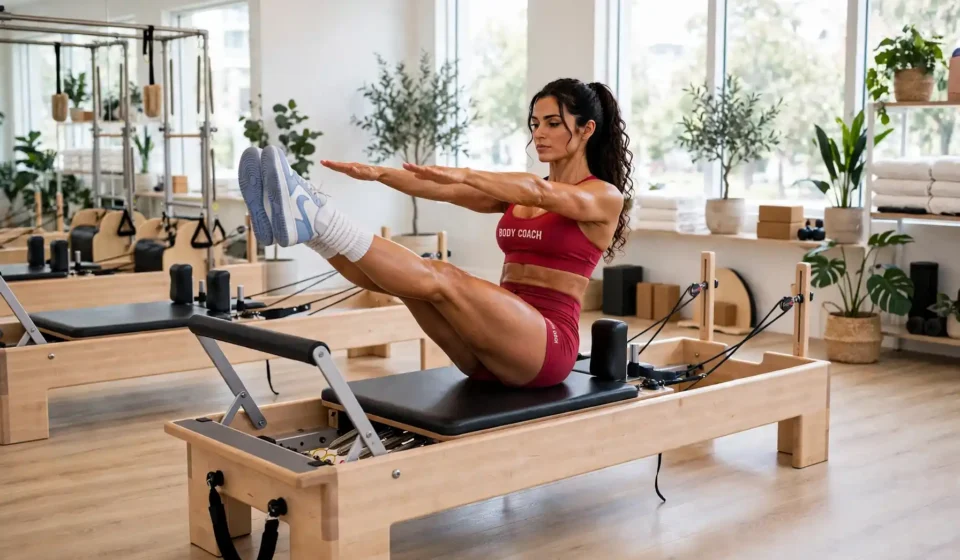

When it comes to building strength, Pilates and weight training are two popular options, but they work your body in different ways. Pilates focuses on controlled movements, core stability, balance, and body awareness, while weight training uses resistance to help muscles become stronger over time.
So, Pilates vs weight training: which is better for building strength?
Pilates vs Weight Training: Which Is Better for Building Strength? The answer depends on your goals, fitness level, and the type of strength you want to develop. Both can be valuable parts of a balanced fitness routine, and you don’t necessarily have to choose just one.
In this guide, we’ll compare Pilates and weight training, explain their main benefits, explore their differences, and help you decide which approach fits your lifestyle.
What Is Pilates?
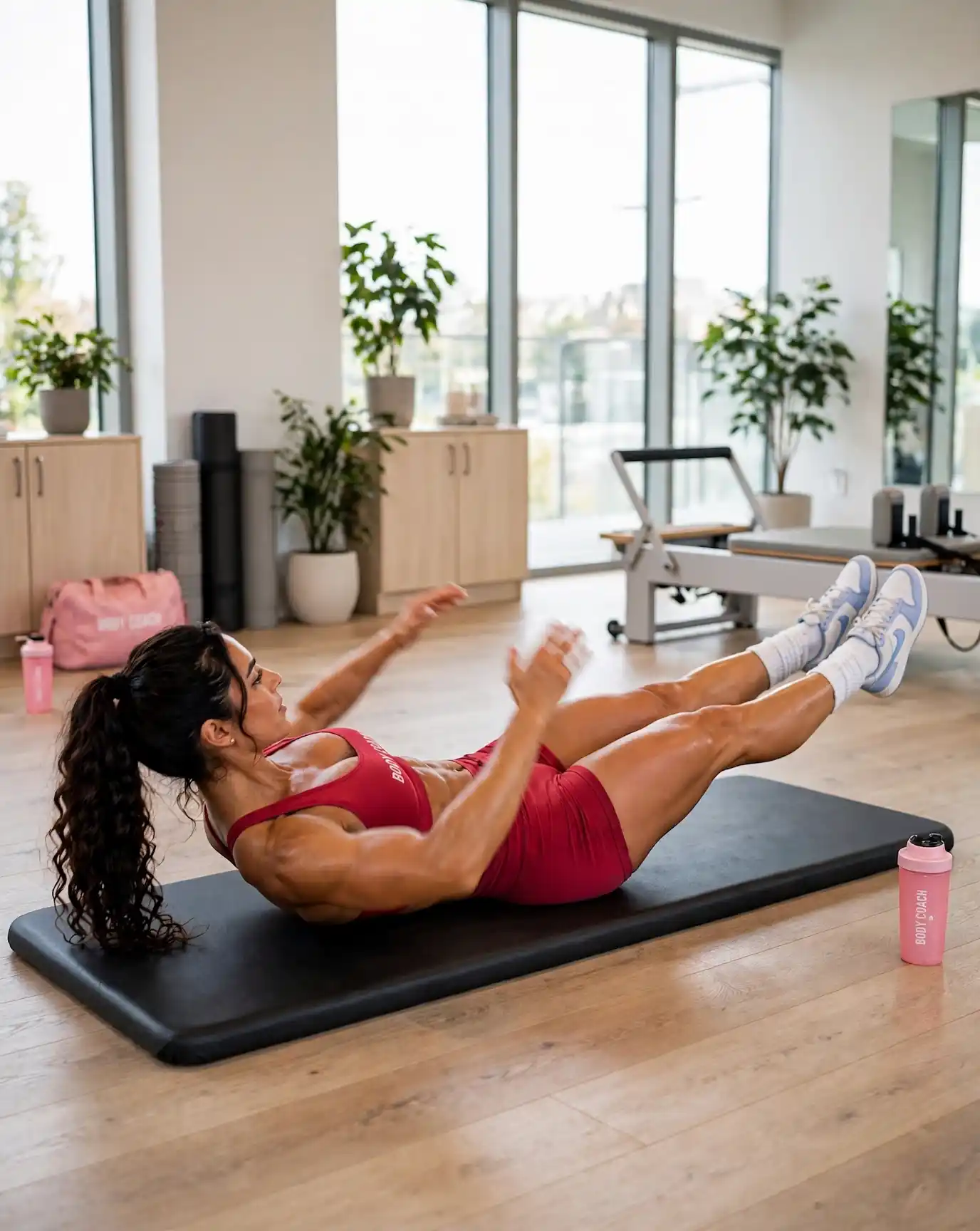
Pilates is a form of exercise that emphasizes controlled movements, breathing, posture, flexibility, and core stability. It can be performed on a mat or with specialized equipment, such as a reformer.
During a Pilates session, you typically move slowly and deliberately while maintaining control of your body. Many exercises challenge your abdominal muscles, back, hips, and other muscles responsible for supporting movement and posture.
Pilates can be adapted for beginners and experienced exercisers alike. Depending on the exercise and equipment, it can also provide a meaningful muscular challenge.
Benefits of Pilates
Improves core strength: Many Pilates exercises engage the abdominal and back muscles to help stabilize the body.
Supports better movement control: Controlled repetitions encourage coordination and body awareness.
Develops flexibility and mobility: Pilates includes movements that take your joints through comfortable ranges of motion.
Challenges muscular endurance: Holding positions or repeating controlled movements can help muscles work for longer periods.
Offers a low-impact option: Many Pilates exercises place relatively little impact on the joints, although individual exercises may need modification.
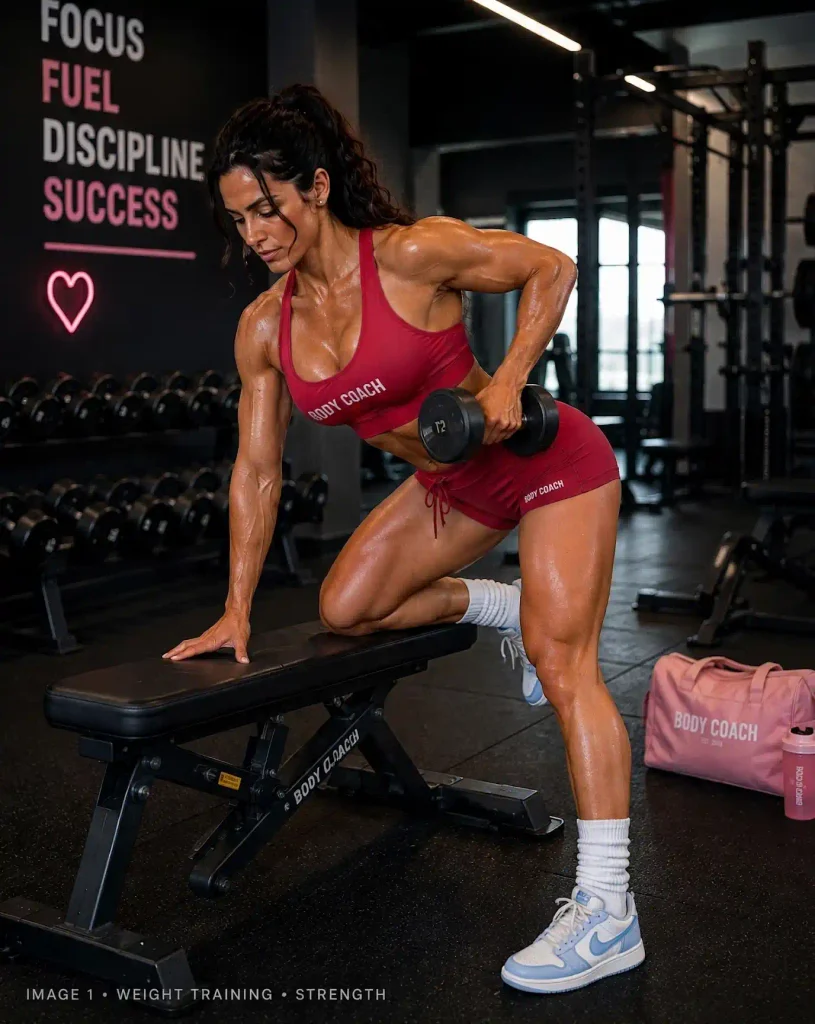
What Is Weight Training?
Weight training is a form of resistance exercise that uses dumbbells, barbells, resistance machines, resistance bands, or body weight to challenge the muscles.
Exercises such as squats, rows, presses, lunges, and deadlifts can target different muscle groups. As your body adapts, you can gradually increase the resistance, repetitions, or training difficulty.
One major advantage of weight training is that it allows you to measure and progressively adjust the load placed on your muscles.
Benefits of Weight Training
Builds muscular strength: Progressive resistance training helps muscles adapt to increasingly challenging loads.
Supports muscle growth: With appropriate training, nutrition, and recovery, weight training can increase muscle size.
Strengthens bones: Resistance exercise can support bone health when performed appropriately.
Improves everyday function: Developing strength can make activities such as carrying groceries, climbing stairs, and lifting objects easier.
Allows measurable progression: You can track weights, repetitions, and sets to monitor improvements over time.
Pilates vs Weight Training: The Main Differences
Although both methods can strengthen your body, their typical training approaches are different.
| Feature | Pilates | Weight training |
|---|---|---|
| Main focus | Core control, stability, movement quality | Strength, resistance, and muscle development |
| Equipment | Mat or Pilates machines | Weights, machines, bands, or body weight |
| Core training | A major part of many sessions | Included through direct and compound exercises |
| Muscle growth | Possible, depending on resistance and training | Often more straightforward to target and progressively overload muscles |
| Flexibility | Often included in sessions | Can be maintained with appropriate mobility work |
| Progression | More challenging movements, control, or resistance | Increased load, repetitions, sets, or difficulty |
| Beginner-friendly | Yes, with suitable modifications | Yes, with appropriate loads and technique |
Neither method is automatically better for every fitness goal. The most useful choice depends on what you want to improve.
Which Is Better for Building Muscle?
If your primary goal is to increase muscle size, weight training is generally the more direct option.
Exercises using dumbbells, barbells, or resistance machines allow you to challenge specific muscles and gradually increase resistance as your strength improves.
For example, you can start with a manageable weight for squats and gradually increase the load as the movement becomes easier.
Pilates can also challenge muscles, especially when exercises involve substantial resistance or difficult positions. Reformer Pilates, in particular, uses spring resistance to make movements more demanding.
However, traditional Pilates sessions are not always structured around progressively increasing resistance in the same way as a dedicated muscle-building program.
Best choice for muscle growth: Weight training is usually the better starting point, although Pilates can complement it.
Which Is Better for Core Strength?
Both Pilates and weight training can improve core strength, but they approach it differently.
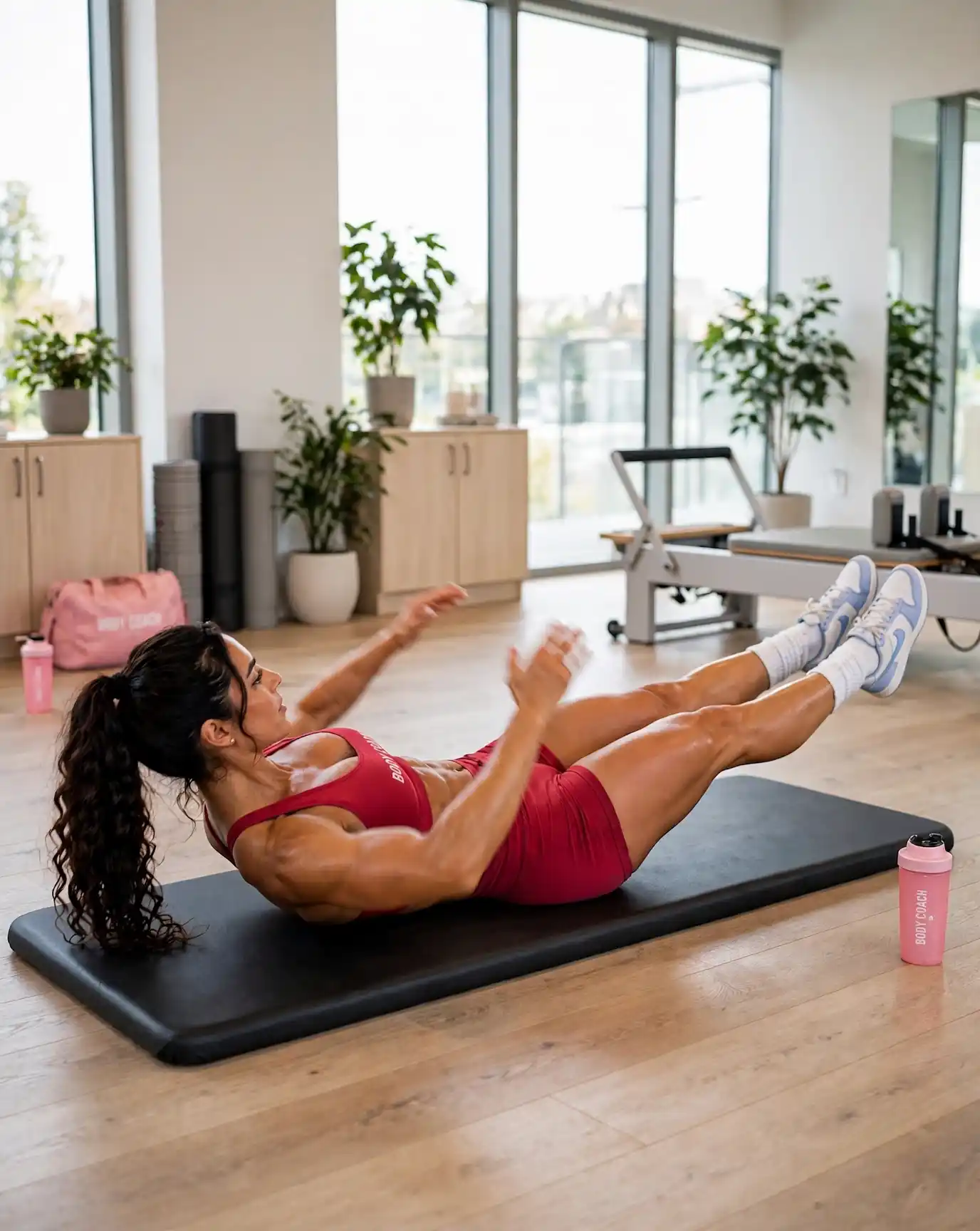
Pilates frequently places the core at the center of the session. Exercises such as the dead bug, plank variations, and controlled leg movements require you to stabilize your trunk while moving other parts of your body.
Weight training also develops the core. Squats, deadlifts, carries, and other compound exercises require the abdominal and back muscles to stabilize your body while handling resistance.
If you enjoy focused core work and controlled movement, Pilates may suit you particularly well. If you want to develop core strength alongside overall muscular strength, weight training is an excellent option.
Best choice for focused core control: Pilates is a strong option, while weight training offers additional opportunities to strengthen the core under load.
Which Is Better for Beginners?
Both Pilates and weight training can be suitable for beginners.
The right starting point depends on your comfort level, physical abilities, and personal preferences.
Choose Pilates if you want to:
- Learn controlled movement and body awareness.
- Work on core stability and coordination.
- Include flexibility and mobility in your exercise sessions.
- Start with low-impact movements.
- Follow a structured mat or reformer routine.
Choose weight training if you want to:
- Build overall muscular strength.
- Increase muscle size over time.
- Learn fundamental resistance exercises.
- Track your progress with weights and repetitions.
- Develop strength for everyday activities.
You can begin either activity with little experience. The important thing is to learn the movements, use appropriate resistance, and increase the challenge gradually.
Can Pilates Help You Get Stronger?
Yes. Pilates can improve strength, particularly muscular endurance, core stability, and control during movement.
Exercises that initially feel difficult may become easier as your muscles adapt and your coordination improves.
The amount of strength you develop depends on factors such as the exercises you perform, the resistance used, how often you train, and how consistently you progress.
If you reach a point where your Pilates routine no longer challenges your muscles, you may need to choose more demanding variations or add resistance to continue progressing.
For goals involving substantial increases in muscle size or maximum strength, a structured weight-training program is usually more practical.
Can You Combine Pilates and Weight Training?
Absolutely. Combining Pilates with weight training can help you benefit from both approaches.
Weight training provides opportunities to build muscular strength and size, while Pilates can add focused core work, controlled movement, balance, and mobility.
You don’t need to do both every day. A balanced weekly schedule can give you time to train and recover.
Example Weekly Workout Schedule
| Day | Activity |
|---|---|
| Monday | Full-body weight training |
| Tuesday | Pilates |
| Wednesday | Walking or rest |
| Thursday | Full-body weight training |
| Friday | Pilates or gentle mobility |
| Saturday | Recreational activity |
| Sunday | Rest |
This is only an example. Beginners may prefer two strength sessions and one Pilates session per week before gradually increasing their activity.
Adjust the schedule to your fitness level, recovery, and available time.
How to Get Started With Pilates
If you want to try Pilates, begin with a beginner-friendly mat session.
Start with simple exercises that emphasize breathing, controlled movement, and a comfortable range of motion.
You might include:
- Pelvic tilts
- Glute bridges
- Bird dogs
- Modified planks
- Gentle spinal mobility exercises
Move slowly enough to maintain control, and don’t force your body into uncomfortable positions.
As you become more comfortable, you can progress to longer holds, more challenging variations, or supervised reformer sessions.
How to Get Started With Weight Training
If you prefer weight training, begin with a simple full-body routine two days per week.
You can use dumbbells, resistance machines, or suitable bodyweight variations.
A beginner session might include:
- Squats or chair squats
- Dumbbell Romanian deadlifts
- Wall push-ups or dumbbell floor presses
- Dumbbell rows
- Shoulder presses with manageable weights
- Farmer carries
Start with one or two sets of each exercise and choose a resistance that allows you to maintain good technique.
When the exercises become easier, gradually increase repetitions or resistance rather than making large jumps in difficulty.
Common Mistakes to Avoid
Expecting Immediate Results
Strength develops gradually. Give yourself time to learn the exercises and build a consistent routine.
Choosing an Exercise You Dislike
The best workout is one you can realistically maintain. If you enjoy Pilates more than lifting weights, that preference matters when building a long-term exercise habit.
Ignoring Recovery
Both Pilates and weight training can challenge your muscles. Include rest and easier activity when needed.
Using Poor Technique
More repetitions, heavier weights, and harder Pilates variations are not useful if you cannot control the movement. Start with an appropriate difficulty level.
Assuming You Must Choose One
You can combine different types of exercise to match your goals. A well-rounded routine can include resistance training, Pilates, cardiovascular activity, and recovery.
Final Verdict: Pilates vs Weight Training
So, which is better for building strength?
Weight training is generally the better choice for increasing muscle size and developing measurable strength, because it makes progressive resistance easier to plan and track.
Pilates is an excellent option for developing core stability, movement control, balance, and muscular endurance, while also incorporating mobility and flexibility work.
If your main goal is to become stronger and build muscle, make weight training the foundation of your routine. If you want to improve control, stability, and movement quality, Pilates can be a valuable choice.
And if you enjoy both, there’s no reason you can’t combine them.
The most effective approach is one that matches your goals, challenges you appropriately, and allows you to stay consistent over time.


[…] Keep your heel grounded and move only as far as your ankle comfortably allows. […]